
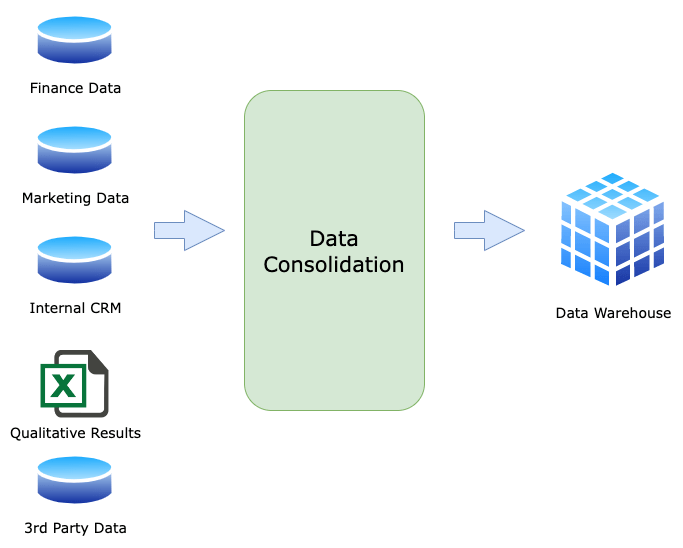
Recent boardroom decisions across major industries have drawn fresh attention to what it means to consolidate operations, as companies grapple with economic pressures and seek streamlined efficiency. Executives at firms like CVS Health and Aetna, in their massive merger, exemplify how consolidation reshapes entire sectors. This renewed focus emerges amid ongoing market volatility, where leaders reference consolidation strategies to justify restructurings and growth plans. Public filings and earnings calls increasingly highlight the term, underscoring its role in navigating competitive landscapes. Investors watch closely, as these moves signal shifts in power and resources. The concept surfaces repeatedly in analyses of deals like Amazon’s Whole Foods acquisition, prompting broader curiosity about its mechanics and outcomes. Such discussions reveal consolidation not as abstract theory, but as a tangible force driving corporate evolution right now.
Core Definitions of Consolidate
Etymological Roots and Evolution
The term consolidate traces back to Latin origins, where “consolidare” implied making something firm or solid through compression. Over centuries, this evolved from physical hardening—think mud turning to rock under pressure—into broader applications. By the 16th century, English usage extended it to uniting disparate elements, as seen in early political treaties where alliances consolidated fractured kingdoms. Today, dictionaries like Merriam-Webster define it as joining into one whole or strengthening positions. This shift mirrors societal needs, from feudal mergers to modern boardrooms. Historical texts show consolidations in land reforms, where fragmented estates consolidated into viable farms. The word’s flexibility allows it to adapt, yet its core—combining for strength—persists across contexts.
Primary Dictionary Meanings
Standard definitions split consolidate into transitive and intransitive forms. Transitive use means to unite or strengthen actively, such as consolidating gains after a market rally. Intransitive, it describes natural firming, like soil consolidating under load in engineering projects. Cambridge Dictionary emphasizes becoming stronger or more certain, applicable to personal habits or corporate structures. Vocabulary.com offers everyday framing: consolidating student loans merges multiple payments into one. These meanings overlap in finance, where banks consolidate accounts for clarity. Each nuance builds on the idea of integration, reducing complexity while enhancing resilience. No single definition captures all; context dictates the shade.
Synonyms and Linguistic Variants
Words like unite, merge, fuse, and strengthen serve as synonyms, each carrying subtle distinctions. “Merge” implies blending equals, while consolidate often suggests one dominant force absorbing others. Antonyms—disperse, weaken—highlight the opposite risks. In business jargon, consolidate pairs with “position” or “hold,” as in consolidating market share post-acquisition. Thesaurus entries list condense and solidify for physical senses, weld for industrial ones. Usage varies regionally; British English leans toward accounting consolidations in reports. American contexts favor debt consolidation in personal finance advice. These variants enrich the term, allowing precise communication without repetition.
Grammatical Usage Patterns
Consolidate functions mainly as a verb, rarely as a noun outside “consolidation.” Past tense “consolidated” dominates headlines, like “firms consolidated assets amid downturn.” Infinitive forms appear in strategies: “to consolidate power requires alliances.” Passive voice suits reporting: debts were consolidated into a single loan. Adverbial phrases modify it—”gradually consolidate holdings”—adding tempo to processes. Sentence examples from Oxford show versatility: Italy consolidated their lead with a goal. Shorter fragments punch impact: consolidate now, regret later. Patterns reveal preference for active voice in motivational contexts, passive in neutral analysis. This grammar underscores the action-oriented nature of consolidation.
Common Misinterpretations
People often confuse consolidate with “concentrate,” mistaking unification for mere focus. Consolidation demands integration, not just emphasis—debts consolidate into one payment, but concentration tracks spending alone. Another pitfall equates it to liquidation, ignoring the strengthening aspect; consolidations preserve value, unlike asset sales. In politics, some read it as mere accumulation, overlooking elimination of redundancies. Casual misuse appears in “consolidate efforts,” vague without specifics. Correctly, it implies measurable outcomes, like consolidated financials revealing true health. These errors dilute precision, especially in high-stakes fields like mergers.
Consolidation in Financial Accounting
Parent-Subsidiary Mergers
When a parent company controls over 50% of a subsidiary, financial statements consolidate line by line. Assets and liabilities combine fully, with intercompany transactions eliminated to avoid double-counting. ExxonMobil’s 1998 consolidation exemplifies this: two oil giants formed a new entity, ceasing independent existence. Adjustments account for minority interests, subtracting non-controlling shares from equity. This process yields a unified balance sheet, income statement, and cash flow. Regulators scrutinize such moves for transparency. Results often reveal hidden strengths, like diversified revenue streams previously siloed. The mechanics demand precise mapping of accounts across entities.
Intercompany Elimination Steps
Elimination entries erase internal balances first. Receivables from subsidiary to parent cancel against payables, preventing inflated assets. Revenue from inter-sales vanishes, ensuring external-only figures. NetSuite outlines six steps: data collection, normalization, adjustments, review, reporting, close. Currency translations adjust foreign subsidiaries, using current rates for assets. Equity method applies to less-than-50% holdings, but full consolidation demands control. Errors here cascade, distorting group health. Automated tools now speed this, yet manual oversight persists for anomalies. Final statements treat the group as one economic unit.
Debt Consolidation Mechanics
Individuals consolidate unsecured debts—credit cards, medical bills—into a single loan. A $16,000 credit card balance at 20% interest, paid minimums, spans decades; a consolidation loan at 7% clears it in five years, saving thousands. Personal loans fund payoffs, simplifying to one payment. Balance transfers offer 0% intro periods but revert high. Home equity taps property value for lower rates, risking foreclosure. Bankrate examples show monthly drops from $267 to $228, accelerating payoff. Eligibility hinges on credit; poor scores face higher rates. Success demands discipline—no new debt during repayment.
Consolidated Statement Preparation
Trial balances gather from all entities post-close. Accounts map to parent charts, normalizing variances. Adjustments journal non-recurring items, then eliminations apply. Cash flows aggregate operating, investing, financing activities distinctly. Footnotes disclose subsidiaries, methods, risks. Amazon’s reports blend e-commerce with Whole Foods, painting full operations. Auditors verify compliance with GAAP or IFRS. Deadlines pressure accuracy; delays ripple to investors. Tools like Anaplan automate, cutting days to hours. The output: a comprehensive view eclipsing individual statements.
Regulatory Compliance Challenges
SEC mandates consolidated filings for public parents, with SOX ensuring controls. International firms juggle IFRS versus GAAP, reconciling differences. Minority interests report separately post-2007 rules. Tax consolidations allow group filing but trap losses internally. Audits probe eliminations rigorously; failures invite penalties. Multinational currency volatility demands hedges, complicating figures. Recent volatility amplifies scrutiny, as seen in tech mergers. Compliance software tracks changes, yet human judgment prevails for judgments. Non-compliance erodes trust, spiking stock drops.
Business and Corporate Applications
Horizontal Merger Examples
Horizontal consolidations join same-industry competitors for scale. Glaxo Wellcome and SmithKline Beecham merged into GlaxoSmithKline in 2000, dominating pharma. LondonMetric acquired LXI Reit in 2024, bulking UK real estate. ExxonMobil consolidated oil rivals, slashing redundancies. Cost synergies cut overlapping staff; revenue grows via cross-selling. Antitrust watches market share—over 40% flags probes. Outcomes vary: some thrive, others dilute focus. These deals reshape sectors, pressuring holdouts.
Vertical Integration Cases
Vertical consolidations link supply chains. AT&T-Time Warner (2018) fused content with distribution, despite hurdles. Amazon-Whole Foods (2017) married online reach to physical stores, optimizing logistics. Bristol-Myers Squibb-Celgene built oncology pipelines. Control tightens: suppliers become internal, squeezing margins upstream. Risks include overextension; successes lock customers in ecosystems. CVS-Aetna created health hubs, blending pharmacy and insurance. Regulators eye monopolies, but efficiencies often prevail.
Conglomerate Acquisition Strategies
Conglomerates consolidate unrelated businesses for diversification. Google’s 2014 Nest buy thrust search into IoT. No synergies demand, just portfolio balance. Risks spread across sectors; revenues stabilize. Critics decry focus loss—value destroys if mismanaged. United Technologies-Raytheon (2020) spanned defense-aerospace, pooling R&D. Management challenges mount; cultures clash. Yet, scale attracts talent, funds innovation. These moves signal ambition amid uncertainty.
Post-Merger Integration Hurdles
Day one post-consolidation tests resolve cultures. Staff cuts spark resentment; systems clash delays reporting. ExxonMobil harmonized IT, easing ops. Communication falters—rumors breed turnover. Legal entities dissolve slowly; taxes linger. Success metrics track synergies: CVS hit $750M savings early. Change agents embed early, training unifies. Failures like AOL-Time Warner haunt, costing billions. Patience pays; full benefits emerge years later.
Market Share Expansion Tactics
Consolidations target share via bolt-ons. Smaller buys consolidate niches without mega-merger scrutiny. Pharma favors this for pipelines. Digital firms snap startups, folding tech seamlessly. Metrics guide: ROI thresholds, overlap scans. Amazon’s spree built clouds, retail, streaming. Antitrust evolves—EU probes data hoards. Winners dictate terms, reshaping competition. Losers consolidate or exit.
Consolidation in Power Dynamics
Political Power Building
Leaders consolidate via coalitions then purges. Stalin launched Five-Year Plans, sidelining Bukharin post-1927. Mussolini’s Acerbo Law (1923) granted Fascists two-thirds seats, muting opposition. Zia-ul-Haq in Pakistan exploited martial law, amending constitutions. Steps: emergency powers, loyalist appointments, media control. Outcomes cement rule but breed resistance. Public acquiesces short-term; long-term fractures emerge.
Historical Dictator Strategies
Putin targeted oligarchs like Khodorkovsky, nationalizing Yukos in 2003. Regional governors fell under federal oversight. Constitutional tweaks extended terms. Mussolini formed Ceka bodyguards, crushed Matteotti. Stalin’s purges eliminated rivals post-Kirov. Patterns: discredit foes, exile, eliminate. Coalitions build then salami-slice dissolve. Legacies endure via institutions.
Military Gains Securing
Armies consolidate post-victory, denying enemy return. Scipio Africanus seized Cartagena (208 BC), starving Hannibal. U.S. doctrine mandates post-combat governance; Torch lacked it initially. Security cooperation deters pre-war. NATO exercises build interoperability. Failures revert gains—Iraq post-2003. Tools: detachments behind lines, infrastructure restore.
Military Campaign Illustrations
WWII planners trained 7,500 for liberated governance. Scipio’s Spain ops linked tactics to strategy. Modern joint forces lag, per reports. CG spans continuum: deter via allies, secure territory, enable governance. Army leads tactical; joint operational. Risks unconsolidated: adversaries reclaim.
Modern Geopolitical Instances
Putin’s Ukraine moves consolidated Crimea post-2014. Regional blocs like EU consolidate sovereignty economically. China firms consolidate African mines. Power vacuums invite; consolidations fill. Unresolved borders linger, fueling tensions.
Consolidation Across Other Fields
Geological and Soil Processes
Soils consolidate under load, expelling water gradually. Terzaghi’s theory models primary (void expulsion) and secondary phases. Clays compress slowest, sands quick. Engineering predicts settlements for foundations. Mining accelerates via surcharges. Nature lithifies sediments over eons into rock.
Everyday Practical Uses
Households consolidate wallets, ditching multiples for one. Students merge loans for simplicity. Teams consolidate schedules into cores. Babies consolidate sleep stretches by months. Spouses unite accounts for rewards. Wallets slim; habits firm.
Military Doctrine Developments
CG doctrine integrates DIME: diplomacy, info, military, economic. Security cooperation exemplifies pre-conflict. Army sets theaters; joint deters. Risks ignoring: competitors consolidate first. Planners embed early.
Scientific and Technical Angles
Geology: loose aggregates harden to coherent rock. Lab oedometers test soil response. Magma solidifies igneous. Sediments lithify sedimentary. Factors: permeability, load duration.
Cultural and Social Dimensions
Monarchs consolidated via spectacles, gazing subjects. Memory consolidates via rehearsal, not just conscious. Child behavior shapes parenting. Organic food studies consolidate preferences data.
The public record on consolidation reveals a multifaceted tool—unifying finances, businesses, power—yet gaps persist in outcomes. Mergers promise synergies but deliver mixed; CVS efficiencies materialized, AOL imploded. Debt relief simplifies yet tempts overspend if undisciplined. Political consolidations endure through institutions, though fractures simmer. Military doctrines evolve, but execution lags in joint prep. Geology’s slow grind contrasts business haste. What records confirm: integration strengthens under pressure, but mismanagement disperses gains. Unresolved remains prediction—will current waves of corporate consolidations, like ongoing tech-health hybrids, solidify empires or crumble under integration weight? Forward pressures test resilience, with volatility as the ultimate arbiter. Investors, leaders, citizens watch as these processes unfold, their full implications emerging only in hindsight.














Leave a Reply