
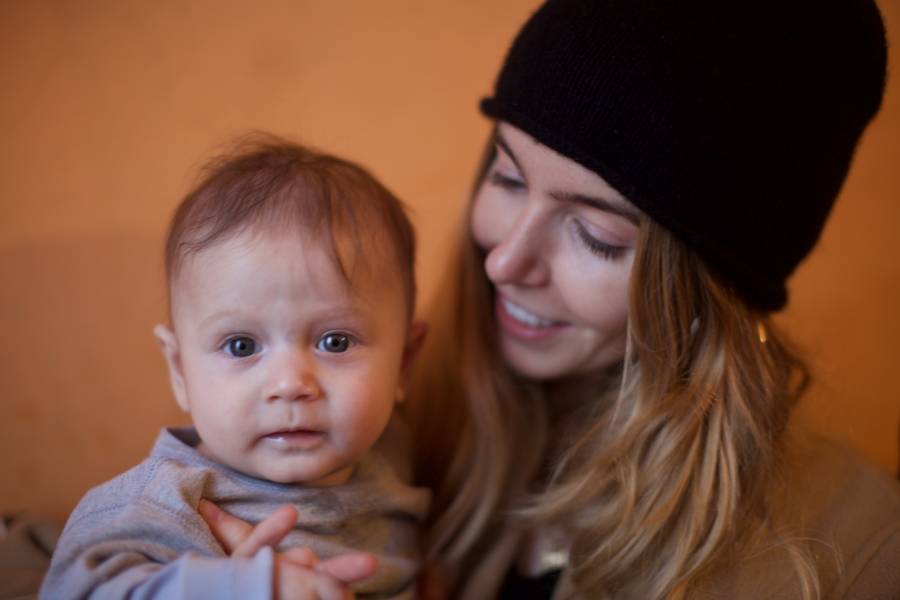

Stacey Dooley children news has captured attention as the documentary presenter navigates parenthood while maintaining a high-profile broadcasting career. The television figure shares a young daughter, Minnie, with partner Kevin Clifton, and reports have suggested the couple experienced pregnancy complications before their family expanded. Public appearances and professional announcements continue to fuel speculation about how the broadcaster balances demanding work commitments with private family life, raising broader questions about visibility, privacy, and the reputational calculus celebrities face when personal matters intersect with public identity.
What separates casual interest from sustained narrative attention is timing. When a public figure’s family status shifts, the attention cycle doesn’t just react to events—it creates interpretive frameworks that outlast the news itself.
The Signals Behind Family Announcements And Media Strategy
Public figures rarely announce family developments without considering downstream effects. Reports have suggested that Dooley experienced an ectopic pregnancy requiring emergency intervention, followed by the arrival of her daughter. The sequencing of confirmation versus silence matters because it sets the terms for how audiences interpret subsequent appearances.
From a practical standpoint, controlled disclosure minimizes speculation-driven narratives. When celebrities withhold details, the void gets filled with assumptions. When they share selectively, they retain narrative authority without sacrificing all privacy.
The data tells us that family-related announcements generate engagement spikes across platforms, but those spikes decay rapidly unless reinforced with new content. That’s why timing matters—releasing information during existing publicity windows (like tour announcements or project launches) creates synergy rather than distraction.
Professional Cycles, Childcare Reality, And What Public Scheduling Reveals
Dooley and Clifton announced they would tour together in a theatrical production, bringing their daughter along with family support. That decision signals something important about their career phase: they’ve reached a point where professional flexibility allows family integration, but only within specific windows.
The reality is that touring with a toddler requires logistical infrastructure most people don’t have access to. The couple mentioned this arrangement works now because their daughter hasn’t yet started school, acknowledging a timeline constraint. That’s the 80/20 rule in practice—they’re maximizing family time during the brief period when schedules remain fluid.
Look, the bottom line is that public figures who succeed in balancing high-visibility careers with young children typically do so by building flexibility into contracts, negotiating on-location childcare, and accepting that some opportunities will be declined. What audiences see as seamless integration usually involves significant unseen coordination.
Reputation Risk, Health Privacy, And The Confirmation Problem
When pregnancy complications become public knowledge, celebrities face a difficult choice: remain silent and risk misinformation, or confirm details and invite further scrutiny. Reports circulated about Dooley’s ectopic pregnancy, putting her in a position where non-response could be interpreted as evasion, yet detailed confirmation expands the scope of questions audiences feel entitled to ask.
I’ve seen this play out repeatedly—medical privacy violations happen incrementally. First, a general health update. Then questions about treatment specifics. Then speculation about emotional impact. Each layer erodes boundaries that can’t easily be rebuilt.
The reputational calculus here involves weighing short-term sympathy against long-term boundary maintenance. Public figures who share vulnerable moments often receive immediate support, but they also set precedents that make future privacy requests seem inconsistent. That’s not a moral judgment—it’s a recognition that audience expectations compound over time.
The Business Economics Of Family-Integrated Projects
When Dooley and Clifton committed to touring together, they weren’t just making an artistic choice—they were solving a family logistics problem through professional structuring. That decision has business implications beyond immediate revenue.
Family-integrated projects allow dual-income households to maintain earning potential without outsourcing all childcare. From a cost perspective, tour arrangements that accommodate family presence reduce the hidden expenses of separation: duplicate housing, increased travel, and the opportunity cost of missed developmental moments.
Here’s what actually works: building family accommodation into project budgets from the outset rather than treating it as an afterthought. The production Dooley and Clifton joined likely absorbed some logistical costs in exchange for securing both performers, demonstrating how family-friendly arrangements can create mutual value.
What I’ve learned is that sustainability in entertainment careers increasingly depends on contract flexibility. Performers who can negotiate terms that acknowledge family responsibilities extend their career longevity because they avoid the burnout-or-exit binary that historically pushed parents (especially mothers) out of demanding roles.
Audience Perception Cycles And The Parenthood Narrative Shift
Public perception of celebrities who become parents follows a predictable arc: initial fascination, then normalization, then occasional flare-ups when professional decisions intersect with family status. Dooley’s transition from solo documentarian to working parent hasn’t fundamentally altered her professional identity, but it has added a dimension that audiences now factor into their interpretation of her choices.
The reality is that parenthood changes how certain professional risks are perceived. Assignments involving extended international travel or dangerous environments now generate questions about family separation that weren’t relevant previously. That’s not necessarily audience criticism—it’s the natural recalibration that happens when public figures’ life circumstances shift.
From a strategic perspective, celebrities benefit when they allow parenthood to inform but not define their public identity. Dooley has continued documentary work while integrating family considerations into touring decisions, signaling that career priorities remain intact even as logistics adapt. That balance maintains audience respect because it avoids both extremes: complete privacy that feels evasive, or oversharing that commodifies family life.


