
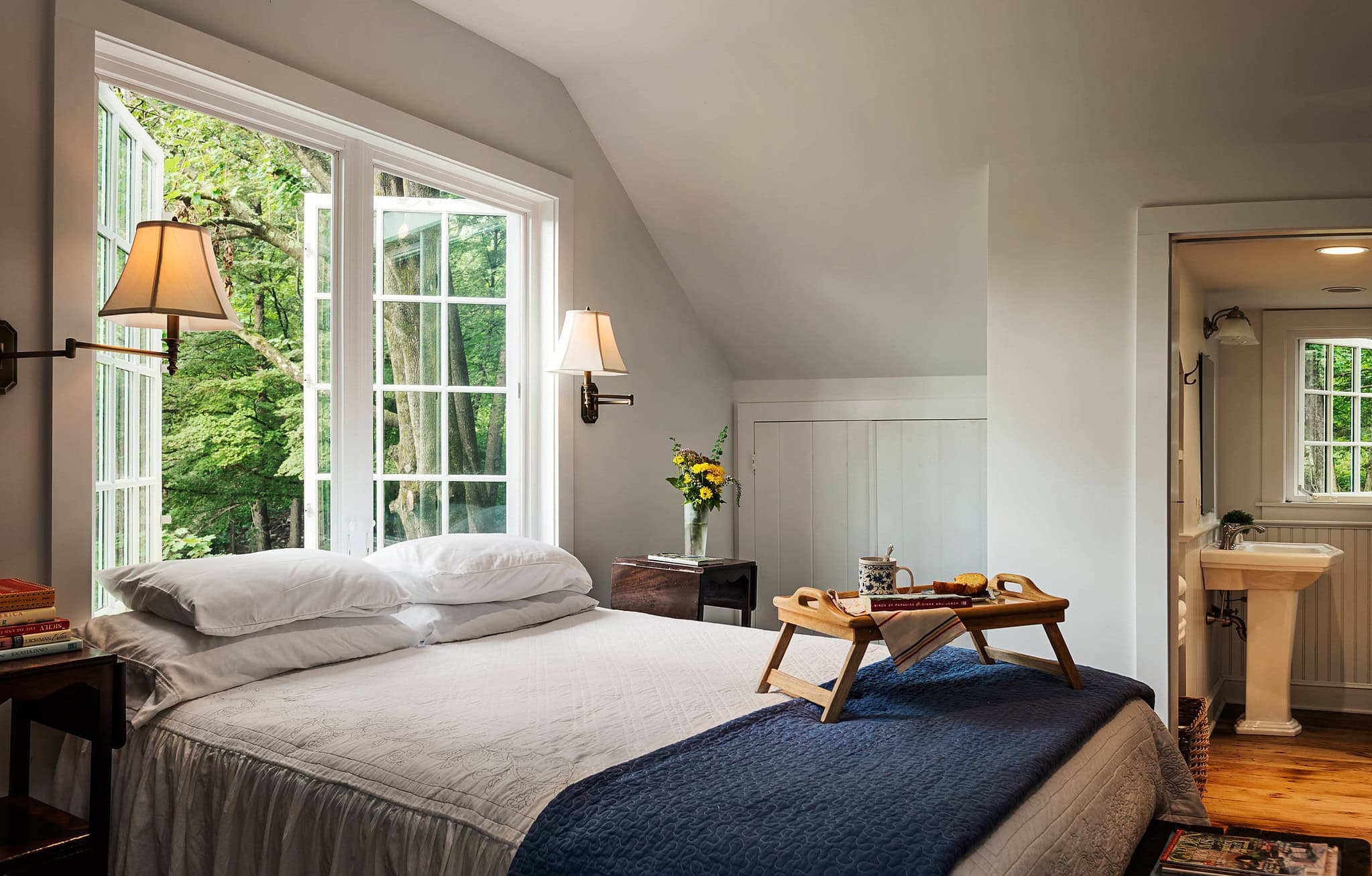
A small guest room doesn’t need more furniture to become more comfortable. Better bedding, open walking space, accessible lighting, useful wall storage, and thoughtful placement can improve the room without consuming valuable floor area.
The key is making the space easy to use. Guests need somewhere to sleep well, place essential belongings, charge a phone, and move around without squeezing past unnecessary pieces.
Start With the Bed and Walking Space
The bed usually occupies the largest part of a small guest room, so its position controls the rest of the layout. Keep the most practical path from the doorway to the bed clear before adding decorative objects.
Homeowners browsing home planning inspiration may see rooms packed with benches, chairs, and cabinets. In a compact guest room, removing one unnecessary item can make a stronger improvement than adding another.
Give the Bed a Clear Purpose
Quality sheets, supportive pillows, and a comfortable blanket can do more for a guest than an extra accent table. Spend available space on comfort first.
Use Walls Instead of Adding Floor Furniture
Wall-mounted shelves can hold a phone, book, glasses, or small personal items without requiring traditional nightstands. Hooks behind the door or along an unused wall provide convenient places for jackets, handbags, and towels.
Ideas found in compact-room content can be adapted selectively. The goal isn’t filling every wall; it’s moving useful functions away from the floor.
| Need | Space-Saving Choice | Benefit |
|---|---|---|
| Bedside surface | Small wall shelf | Keeps floor open |
| Clothing storage | Wall hooks | Avoids another cabinet |
| Reading light | Wall-mounted lamp | Frees bedside space |
| Luggage location | Clear floor corner | Prevents walkway clutter |
Improve Comfort Through Lighting and Access
A guest shouldn’t have to cross a dark room to switch off the only light. Place a reachable bedside lamp or wall light near the sleeping area, and make sure its switch is easy to understand.
Charging access matters too. If the nearest outlet sits behind heavy furniture, use a safe, properly rated solution that brings charging within reasonable reach.
People looking through home design reading often focus on visual styling, but convenience is what guests notice at bedtime. A beautiful room becomes frustrating when ordinary tasks require rearranging furniture.
What Small Guest Rooms Often Get Wrong
Trying to make a guest room look complete can lead to overfurnishing. A chair, dresser, bench, two nightstands, floor lamp, and decorative basket might work in a larger bedroom but can turn a small room into an obstacle course.
Another mistake is using every available surface for decor. Guests need open space for their belongings. Leaving part of a shelf or tabletop empty can make the room feel more welcoming, not unfinished.
Make Storage Temporary Rather Than Permanent
Guests usually need short-term storage rather than an elaborate closet system. Several empty hangers, a few wall hooks, and a designated luggage spot may be enough for a brief stay.
If an existing closet is mostly occupied by household storage, clear one reachable section before visitors arrive. That small adjustment provides usable space without purchasing another piece of furniture.
Frequently Asked Questions
Does a small guest room need a nightstand?
No. A compact wall shelf, existing ledge, or narrow built-in surface can hold bedtime essentials while preserving valuable floor space.
How can I make a guest bedroom feel less cramped?
Keep walking paths open, reduce unnecessary furniture, use light effectively, and avoid filling every surface with decorative objects. Visual breathing room can make a major difference.
Where should guests put their luggage in a small room?
Choose one deliberate location such as an open closet section, clear wall edge, or unused corner where luggage won’t block the door or main walkway.
Prioritize What Guests Actually Use
A compact guest room works best when every choice supports sleep, movement, storage, or convenience. More furniture rarely solves a room that already feels crowded.
Before buying anything new, remove what doesn’t serve the guest, improve the bedding and lighting, and make existing walls work harder. A small room with thoughtful empty space often feels more comfortable than a larger room filled to capacity.






Leave a Reply