
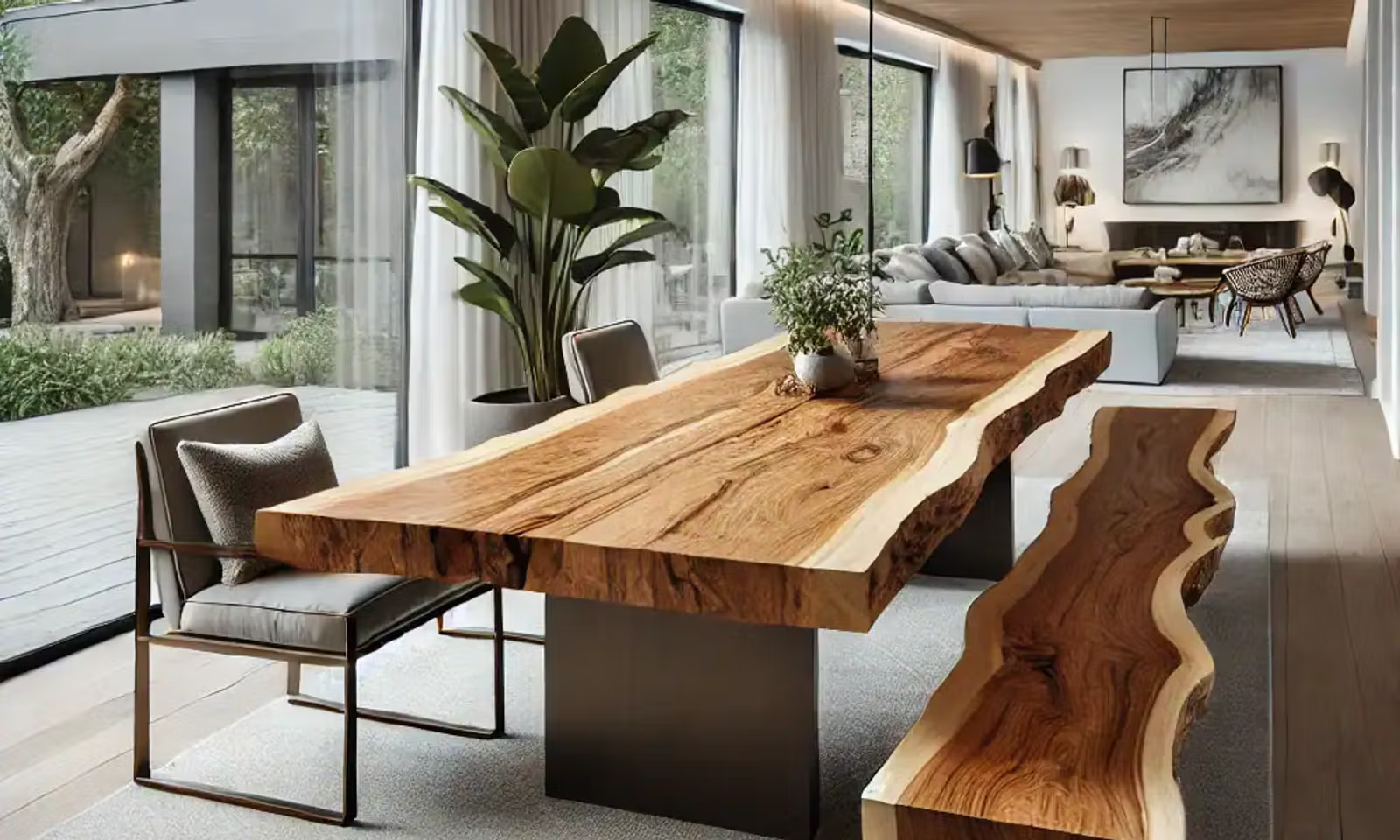
A small dining area can feel comfortable without holding a full-size dining set. Cramped dining corners usually become frustrating because furniture consumes circulation space or seating is arranged without considering how people actually move. Choosing a table shape, chair style, and layout around the available footprint can create useful dining space without making the room feel packed.
Measure Movement Space Before Shopping
Start with the usable floor area rather than the table you hope will fit. Account for doors, cabinet openings, walkways, radiators, and anything else that must remain accessible.
A chair also needs space to move away from the table. Testing the footprint with painter’s tape or flattened cardboard can show whether people can sit and stand comfortably before furniture enters the room.
| Space Challenge | Possible Choice | Main Benefit |
|---|---|---|
| Narrow corner | Round table | Fewer sharp edges |
| Tight wall side | Bench | Reduced chair clearance |
| Flexible household | Drop-leaf table | Adjustable surface |
| Limited floor area | Armless chairs | Smaller footprint |
Choose Seating That Uses the Edges Efficiently
A built-in or freestanding bench can work well along a wall because it doesn’t require the same pull-back space as several individual chairs. Benches are especially useful when one side of the table rarely needs open access.
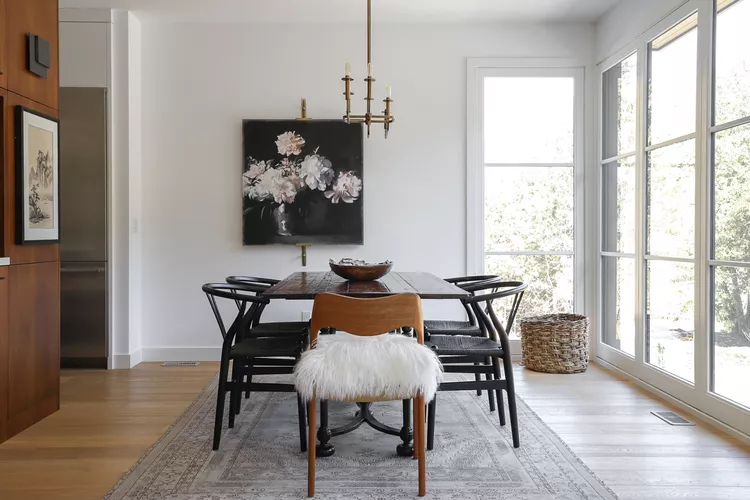
Exploring dining layout inspiration can help clarify how table dimensions and seating styles affect circulation. In especially small corners, a pedestal table may also provide easier leg placement than a table with four bulky corner legs.
Avoid oversized upholstered dining chairs when every inch matters. Slim profiles usually allow more people to move around the table comfortably.
Make the Corner Feel Visually Lighter
Crowding isn’t only physical. Heavy furniture, dark visual blocks, oversized fixtures, and too many decorative objects can make a small dining area appear even tighter.
Ideas for small-space home planning often work because they reduce visual interruption. Chairs with open backs, a simple table base, and limited tabletop decoration can make the same floor area feel less congested.
Good lighting matters too. A pendant centered over the table can define the dining zone without consuming floor space.
Use Walls Without Overloading Them
A wall beside the table can handle storage, decoration, or lighting without stealing valuable walking room. Shallow shelves, a narrow ledge, or compact artwork can provide character while keeping the floor clear.
Consider wall and dining inspiration when deciding how much visual detail the corner can handle. One larger piece of art may look calmer than several small objects competing for attention.
If storage is necessary, favor shallow cabinets and keep door swing in mind before placing them beside seating.
Common Layout Choices That Make Small Dining Areas Worse
Pushing the biggest possible table into a corner may increase tabletop area while making everyday use miserable. If chairs can’t move or people must squeeze sideways to pass, the furniture isn’t truly fitting the space.
Another mistake is matching every seat. A bench on one side and movable chairs on the others may function better than four identical chairs. Small rooms often benefit from mixed furniture when each piece solves a specific space problem.
Frequently Asked Questions
Is a round table better for a small dining corner?
It can be. Round tables eliminate sharp corners and may improve circulation in compact areas, although the best shape still depends on the room’s dimensions and where people need to walk.
Can a bench save space in a dining area?
A bench placed against a wall can reduce the clearance needed behind individual chairs. It works especially well where diners don’t need to enter and exit from both sides of the seating.
What size dining table should I buy for a tight space?
Measure the room and account for chair movement, door openings, and circulation before choosing dimensions. Testing the proposed footprint on the floor is more reliable than selecting a table based only on advertised seating capacity.
Design Around Movement, Not Maximum Seating
A dining corner feels successful when people can use it without constantly shifting furniture. Start with circulation, then choose a table and seating arrangement that fit those movement patterns. Benches, pedestal bases, flexible tables, and visually lighter pieces can make limited space work harder. Give up one unnecessary seat if doing so makes every meal easier to enjoy.

Leave a Reply