
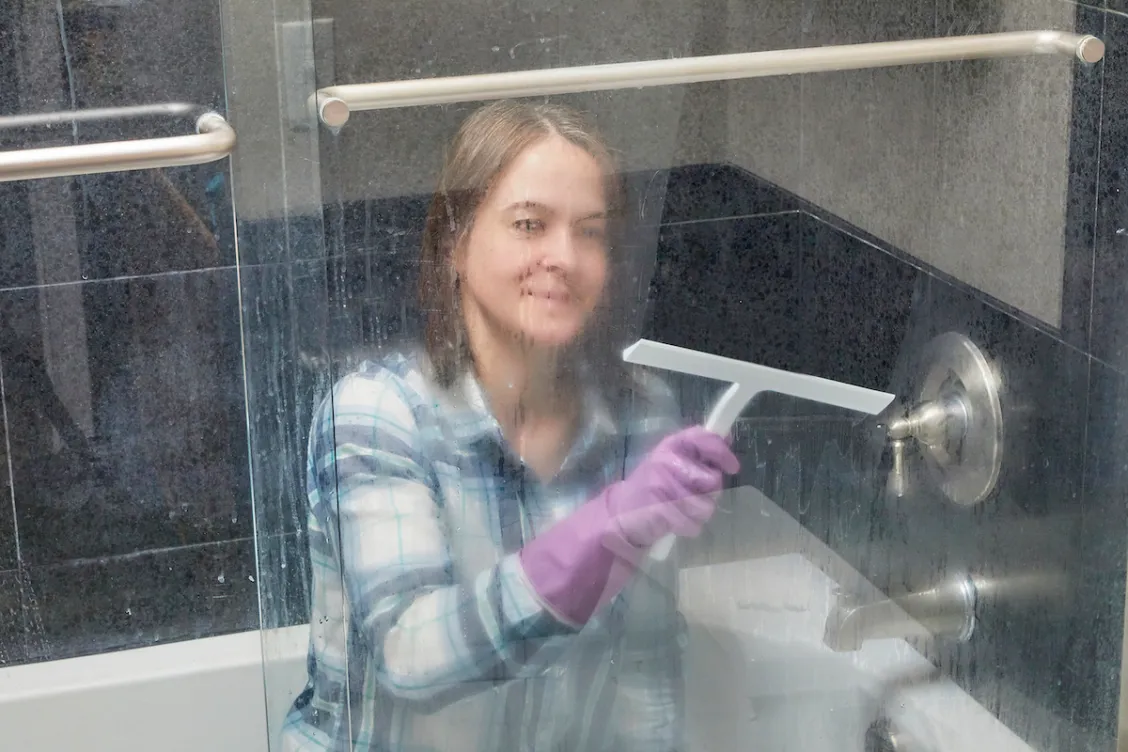
Soap scum forms when soap residue combines with minerals, body oils, and everyday bathroom grime. Removing it is easier when you soften the buildup first, use a cleaner compatible with the surface, and wipe repeatedly rather than attacking the area with harsh abrasives that may scratch the finish.
Identify the Surface Before You Clean
Glass, ceramic tile, acrylic tubs, fiberglass, natural stone, and metal fixtures don’t all tolerate the same products. A cleaner that works well on shower glass may be inappropriate for stone or a delicate coating.
Bathroom ideas seen in interior planning galleries often combine several materials in one small area. Treat each material separately rather than spraying one strong cleaner across everything.
Start With the Gentlest Method
Warm water and a soft microfiber cloth can loosen light residue. For heavier buildup, use a bathroom cleaner approved for the specific surface.
Always follow product instructions and provide ventilation. Avoid combining cleaning products, especially when their ingredients are unknown.
Give Thick Residue Time to Soften
Heavy soap scum usually won’t disappear with a quick wipe. Apply an appropriate cleaner and allow the recommended contact time before gently working the surface.
Regular cleaning habits featured among bathroom styling resources may help spaces look polished, but frequent light cleaning also prevents residue from becoming a hardened layer that takes much longer to remove.
| Surface | Main Concern | Safer Technique |
|---|---|---|
| Shower glass | Mineral film | Non-scratch pad |
| Ceramic tile | Grout buildup | Soft brush |
| Acrylic tub | Scratching | Mild cleaner |
| Natural stone | Chemical damage | Stone-safe product |
Work in Small Sections
Cleaning one manageable section at a time prevents product from drying before you can wipe it away. It also makes it easier to see where residue remains.
For broader home-maintenance ideas, interior care references can be useful context, but bathroom cleaning still comes down to surface compatibility. Rinse each treated area well so loosened residue doesn’t dry back onto the finish.
Pay Attention to Corners and Fixtures
Soap scum commonly collects around faucet bases, shower-door tracks, shelves, handles, and the lower sections of shower walls. A soft toothbrush or small detailing brush may reach areas a large sponge misses.
Avoid metal scraping tools on easily scratched surfaces. Damaging a finish can make future residue more noticeable.
Prevent the Film From Returning Quickly
Removing water and soap residue after showers can dramatically reduce buildup. A squeegee on glass and a quick wipe of wet surfaces take less effort than removing a thick layer later.
Ventilation also helps. Run an exhaust fan when available and allow wet surfaces to dry rather than leaving the bathroom closed and humid.
Cleaning Mistakes That Can Damage the Bathroom
Abrasive powders and rough pads may make soap scum disappear quickly while leaving fine scratches underneath. On glossy or transparent surfaces, those marks can become more visible than the original residue.
Another mistake is assuming stronger acids are always better against mineral deposits. Some finishes and natural stone can be etched or discolored by acidic products. Read both the cleaner label and the surface-care guidance before treatment.
Frequently Asked Questions
Why does soap scum come back so quickly?
Hard water minerals, bar-soap residue, body oils, and slow-drying surfaces can rebuild the film after every shower. Regular wiping limits how much material remains behind.
Can soap scum permanently damage shower surfaces?
Long-term buildup may become difficult to remove and can hide staining or deterioration. More commonly, damage happens when overly abrasive or incompatible cleaners are used during removal.
Is a squeegee worth using after every shower?
It can significantly reduce water droplets and residue on glass and tile. The habit takes little time and often makes weekly bathroom cleaning easier.
Make Routine Cleaning Easier
Soap scum is simpler to control before it becomes thick and chalky. Choose cleaners based on the actual surface, let stubborn residue soften, use non-scratch tools, and rinse thoroughly. Once the bathroom is clean, a quick post-shower wipe can prevent much of the same buildup from returning.












Leave a Reply