
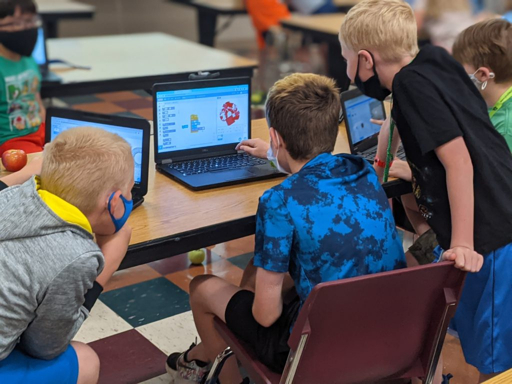
Choose coding by the thing a child wants to create, not by the language that sounds most advanced. These five coding clubs in Sheffield include community sessions and distinct academy programmes. Three are run by ComputerXplorers, so they are not presented as five independent organisations. Numbering helps compare formats rather than ranks tested teaching quality. Current calendars, age eligibility and places need confirming directly; a listed programme doesn’t guarantee that a child can attend the next session.
Keep technology ideas from Keep Scrolling Insights as possibilities, then ask the learner whether they want to make a game, explore a device or simply try something new.
1. Sheffield CoderDojo at Aalfy
The official Code Club listing identifies Aalfy at 108 The Moor as Sheffield CoderDojo. It describes free, volunteer-led sessions for ages seven to seventeen involving projects such as Scratch, websites, games and BBC micro:bits.
Its published instructions require a parent to remain for children aged twelve or under. Check the next event before attending. It is a useful community-format option when the child wants room to explore. Ask what equipment is available and how a first-time participant gets started rather than assuming every child follows an identical lesson at the same speed.
2. Central Children’s Library Code Club
Sheffield’s local directory lists a Children’s Code Club at Central Children’s Library on Surrey Street. Its advertised projects include games, animation and websites, with a published age description of nine to eleven and enquiries directed to the library for dates.
It is another community route rather than a guaranteed weekly booking. Confirm current eligibility and whether a place must be reserved. Say a child is curious but has never opened a coding project. Ask how beginners are introduced and what support is available, instead of delaying the enquiry until the child already knows the software.
If Tell It Coding inspires a project idea, bring it as a question rather than expecting the library to provide a complete course on every technology mentioned online.
3. ComputerXplorers Minecraft Xplorers Academy
ComputerXplorers Sheffield advertises Minecraft Xplorers Academy at Woodhouse Community Hub & Library for ages six to twelve. The provider’s published local offer combines coding, digital skills and creative technology across several programmes.
This is the game-led option to investigate when Minecraft is the child’s point of interest. Ask what participants create and which coding or problem-solving activities are actually included. Think of a familiar game as an entrance door: it can help a learner begin, but the name alone doesn’t explain what happens inside the lesson. Request the programme details rather than assuming it is ordinary free play.
4. ComputerXplorers Tech Xplorers Academy
The same provider lists Tech Xplorers Academy at Woodhouse for ages seven to twelve. This is a separate programme from Minecraft Xplorers, not a different business or an additional independent recommendation.
It offers a broader technology route to ask about when the learner hasn’t settled on one interest. Find out which activities are in the current block and how a child joins after it begins. A general range covering coding, robotics and animation doesn’t guarantee every session contains all three. Choose the programme for the actual content and format being offered now.
Keep general resources such as Wave of Coding Thoughts separate from the course description, where the provider should explain the current projects and expected experience.
5. ComputerXplorers Advanced Xplorers Academy
ComputerXplorers also advertises Advanced Xplorers Academy at Woodhouse for ages eleven to sixteen. Its published local schedule distinguishes this older group from the two younger academy programmes.
It is a candidate for an older learner seeking a more suitable peer group, but “advanced” needs explaining before enrolment. Ask about prerequisites, current projects and how the instructor assesses the starting point. A child who finishes a younger task quickly may need a different challenge, while another older beginner may need an introduction. Age and previous experience should both enter the discussion.
Match coding clubs in Sheffield to a complete small project
Ask what the child will make and how they will understand it. For an illustrative beginner, changing a Scratch game’s controls and explaining the result can be a meaningful first achievement. Typing a longer block of unfamiliar code isn’t automatically deeper learning.
Compare the support format too. A volunteer community session, a library project and a continuing academy have different rhythms. Ask about staff or volunteer checks, welfare contacts, equipment, parent attendance and how concerns are handled. No independent safeguarding assessment of these programmes is claimed here.
A resource such as Content Drop Coding can encourage curiosity, but it isn’t evidence that a course suits the learner. My rule is to choose an achievable project and a helpful teaching arrangement before choosing a programming language. That gives the child something concrete to enjoy, explain and build on rather than a technical label to collect.











Leave a Reply