
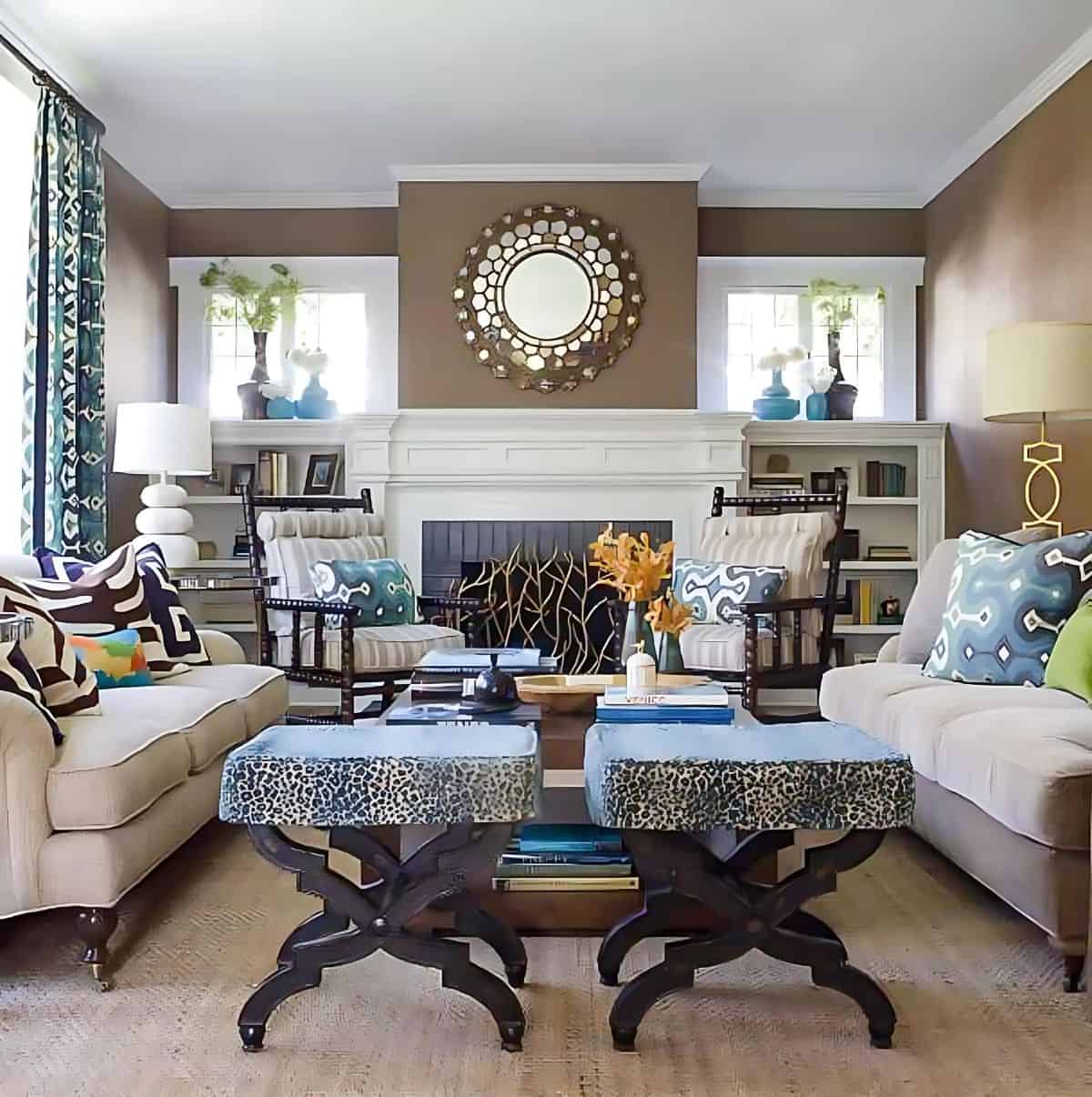
Crowded family rooms often have enough square footage but too many competing pathways, oversized pieces, and small objects claiming visual attention. Making the room feel better doesn’t automatically require removing the furniture everyone enjoys.
The stronger approach is deciding what each area needs to do, then giving movement, seating, and storage their own space.
Fix the Walking Paths First
Before moving decorative items, look at how people travel through the room. Paths between entrances, seating, televisions, windows, and adjoining rooms should feel obvious instead of forcing people around furniture corners.
When collecting general home inspiration, compare ideas with your real measurements. A layout that looks spacious in a photograph may depend on a much larger room.
Move Furniture Away From Traffic
A sofa or chair doesn’t need to touch a wall to save space. Moving seating slightly inward can sometimes create a cleaner path behind it while making the conversation area feel more intentional.
Start with the largest furniture pieces before adjusting smaller tables and accessories.
Give Every Large Piece a Clear Job
Crowding often happens when several items perform almost the same function. Two side tables, an oversized coffee table, extra chairs, multiple storage units, and a large media console can quickly compete for floor area.
Use design-focused browsing for ideas, but ask a practical question about every major object: does this piece improve seating, storage, viewing, or everyday use?
| Layout Problem | What It Causes | Possible Fix |
|---|---|---|
| Oversized coffee table | Tight circulation | Choose a smaller footprint |
| Chairs blocking entry | Awkward movement | Angle or relocate them |
| Too many small tables | Visual clutter | Keep the most useful ones |
| Wide media storage | Lost floor area | Consolidate storage |
Keep Comfort While Reducing Visual Weight
You don’t have to replace a comfortable sofa simply because it looks large. Instead, reduce the visual competition around it.
A simpler rug pattern, fewer objects on surrounding surfaces, slimmer lamps, and consolidated storage can make substantial furniture feel more balanced. Broader online reading resources can supply ideas, but comfort should remain part of the layout decision.
Use Vertical Space More Intentionally
When the floor feels full, walls become more valuable. Shelving, wall-mounted lighting, hooks, and taller storage can move useful items upward without sacrificing seating.
Avoid filling every wall, however. Leaving some open visual space gives the eye a place to rest and can make the entire room appear less crowded.
Where Decluttering Alone Falls Short
Removing accessories won’t solve a poor furniture layout. A room can be nearly empty and still feel cramped if a sofa blocks the main route or a coffee table leaves too little clearance around seating.
The opposite is also true. A family room can contain plenty of objects and still work well when pieces are scaled appropriately and grouped around clear functions. Layout matters as much as quantity.
Frequently Asked Questions
Should all family-room furniture sit against the walls?
No. Pulling furniture slightly away from walls can create better conversation zones and, in some layouts, clearer circulation. Test the arrangement according to doorways, windows, traffic patterns, and room dimensions.
How can I make a family room look bigger without buying furniture?
Clear major walking paths, consolidate small decorative objects, reduce surface clutter, adjust furniture angles, and use vertical storage. Small changes can make the existing floor area easier to see and use.
What furniture should I move first?
Start with the largest piece, usually the sofa or sectional. Its position determines much of the remaining layout, including chair placement, table spacing, television viewing, and movement through the room.
Design Around How the Room Is Used
A comfortable family room doesn’t need to look empty. It needs enough breathing space for people to move naturally while keeping the seating and functions the household actually uses.
Measure first, establish the main pathway, position the largest furniture, and then add smaller pieces back selectively. The result should feel easier to live in, not stripped down for appearance.




Leave a Reply