
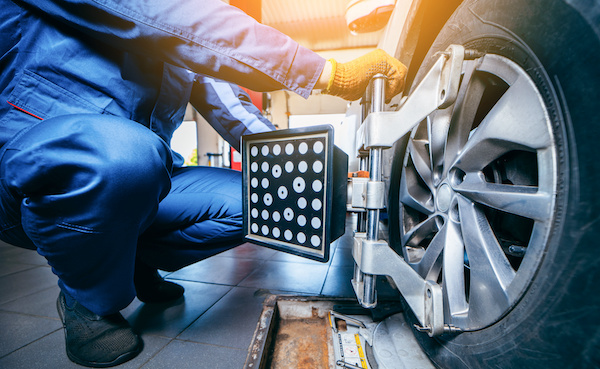
Wheels that aren’t pointing in the correct direction can create resistance every time the vehicle moves. Poor wheel alignment may increase tire scrub, reduce stability, and contribute to uneven tire wear while forcing the vehicle to overcome unnecessary drag.
Alignment problems are often subtle at first. A steering wheel that sits off-center or tires wearing differently across the tread can provide useful clues.
How Alignment Creates Unnecessary Resistance
Correct alignment keeps the tires positioned according to the vehicle manufacturer’s specifications. When toe, camber, or related angles move outside the intended range, a tire may travel slightly sideways instead of rolling cleanly forward.
Suspension wear and impacts can contribute to these changes. Drivers exploring axle and wheel geometry topics may find that the direction each wheel travels matters to both tire life and vehicle behavior.
Tire Scrub Can Be Easy to Miss
Severe alignment problems may make a car pull noticeably. Smaller deviations can be harder to feel while still causing tread wear over time.
Because the steering system compensates while driving, owners may become accustomed to the change and assume the vehicle’s behavior is normal.
Signs an Alignment Check May Be Needed
Uneven tire wear is one common warning sign. Feathered tread edges, wear concentrated on one side, or recurring differences between tires can justify closer inspection.
A steering wheel that no longer sits straight while the vehicle travels on a level road is another clue. Routine vehicle workshop maintenance can include checking tires and suspension components before alignment adjustments are made.
| Possible Sign | What You May Notice | Next Check |
|---|---|---|
| Uneven tread wear | One edge wears faster | Inspect alignment |
| Off-center steering | Wheel sits crooked | Check geometry |
| Vehicle pulling | Drifts to one side | Inspect tires/alignment |
| Recent pothole impact | Steering feels different | Check suspension |
Alignment and Tire Condition Work Together
An alignment machine can measure wheel angles accurately, but technicians also need to consider tire condition and worn suspension parts. Aligning a vehicle with loose or damaged components may not solve the underlying problem.
Owners reading about car stance and handling setups should also remember that suspension changes can alter alignment geometry. Lowering, replacing suspension parts, or changing certain chassis components may make a new alignment necessary.
Tire pressures should be checked too. A low tire can cause pulling or added rolling resistance that feels similar to an alignment problem.
What Drivers Often Misdiagnose
Not every steering pull means the alignment is wrong. Unequal tire pressure, tire construction differences, road crown, brake drag, or damaged suspension components can produce similar symptoms.
Another mistake is requesting an alignment without inspecting worn parts first. If a ball joint, tie-rod end, bushing, or other relevant component has excessive play, the alignment may not remain accurate.
Frequently Asked Questions
Can a pothole cause wheel alignment problems?
A hard pothole impact can change alignment or damage suspension and steering components. If the steering wheel position, tire wear, or handling changes after an impact, an inspection is sensible.
How often should wheel alignment be checked?
There isn’t one interval that fits every vehicle and driving environment. Alignment is worth checking when symptoms appear, after significant suspension work, or after impacts that may have altered steering or suspension geometry.
Will an alignment improve fuel economy immediately?
If misalignment was creating meaningful tire scrub, correcting it may reduce unnecessary resistance. The improvement depends on how far the alignment was out and whether other efficiency problems are also present.
Correct the Cause Before Tires Pay the Price
Alignment affects more than whether a car travels straight. It changes how cleanly the tires roll, how evenly they wear, and how predictable the steering feels.
Check pressures first, inspect worn suspension parts, and measure alignment when symptoms suggest a problem. Correct geometry reduces needless resistance while protecting the tires you’ve already paid for.










Leave a Reply