
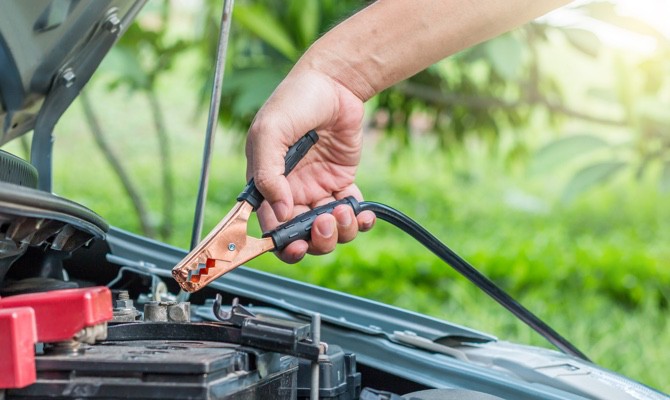
A vehicle can start normally and still be moving toward a breakdown if the charging system stops replenishing the battery. Charging system failure often develops through alternator problems, loose connections, damaged belts, or wiring faults.
Testing the charging system early can separate an alternator problem from a weak battery and prevent repeated jump-starts that never address the cause.
Understand What the Alternator Does
The battery provides the energy needed for starting, while the alternator supplies electrical power and helps recharge the battery once the engine is running. If alternator output becomes inadequate, the vehicle gradually begins operating from stored battery energy.
Drivers browsing automotive system guidance may encounter both battery and alternator symptoms because the two systems interact closely. That overlap is why testing matters more than guessing from one warning sign.
Warning Signs Can Overlap
Dim headlights, slow accessories, warning lamps, hard starting, and a discharged battery can all occur when charging performance drops.
Those same symptoms can also appear with corroded battery terminals or a battery near the end of its service life. A voltage and load evaluation helps separate the possibilities.
Inspect the Drive Belt and Connections
Many alternators depend on the serpentine belt for mechanical drive. A loose, slipping, contaminated, or broken belt can reduce or completely stop alternator operation.
General vehicle breakdown resources may discuss charging failures, but a physical inspection can reveal straightforward causes such as a disconnected cable, loose terminal, damaged belt, or heavy corrosion.
| Symptom | Possible Connection | Useful Check |
|---|---|---|
| Battery warning light | Charging fault | Test system output |
| Dim lights | Low voltage | Check alternator |
| Repeated dead battery | Battery or charging issue | Test both |
| Belt noise | Drive problem | Inspect belt |
Test Before Replacing the Battery
A discharged battery doesn’t automatically mean the battery itself has failed. If the alternator isn’t charging, even a new battery can eventually become discharged.
Information about engine and electrical systems can support general understanding, but diagnosis should include the battery condition, charging voltage, cable integrity, and alternator performance rather than focusing on one component alone.
Pay Attention to Electrical Load
Some charging faults become more obvious with headlights, blower motors, rear defrosters, or other electrical loads operating. The system may appear acceptable at idle with few accessories on but struggle when demand rises.
Professional test equipment can evaluate output under different conditions without relying on dashboard symptoms alone.
Check for Parasitic Drain When Needed
If the charging system tests correctly but the battery repeatedly dies after the vehicle sits, the problem may be an unwanted electrical draw rather than the alternator.
A light, module, accessory, or wiring fault can continue using current with the ignition off. That requires a different diagnostic path from a charging-output problem.
Why Replacing Parts by Guesswork Fails
Battery and alternator symptoms are easy to confuse. Replacing whichever component seems most likely can become expensive when the actual cause is a loose connection, damaged cable, slipping belt, or parasitic draw.
Another poor method is disconnecting a battery cable while the engine is running to “test” the alternator. Modern vehicle electronics can be sensitive to voltage disturbances, so proper electrical testing is the better approach.
Frequently Asked Questions
Can a bad alternator ruin a new battery?
A failing charging system can repeatedly leave a new battery undercharged. Continued deep discharge can reduce battery performance and service life, so charging problems should be corrected rather than relying on repeated recharging.
Will a car keep running with a failed alternator?
It may continue running temporarily using battery power, but operation becomes increasingly unreliable as stored energy falls. Electrical systems may begin shutting down before the engine eventually stops.
Does a battery warning light always mean the battery is bad?
No. The warning commonly indicates a charging-system problem rather than identifying the battery itself. Alternator output, wiring, belt condition, terminals, and battery health should all be considered.
Test the Whole Charging System
Don’t wait until the vehicle needs another jump-start. Inspect the belt and electrical connections, then test the battery and alternator as parts of the same system. Finding the real charging fault early is usually more effective than replacing a battery that may only be discharged because another component failed.










Leave a Reply