
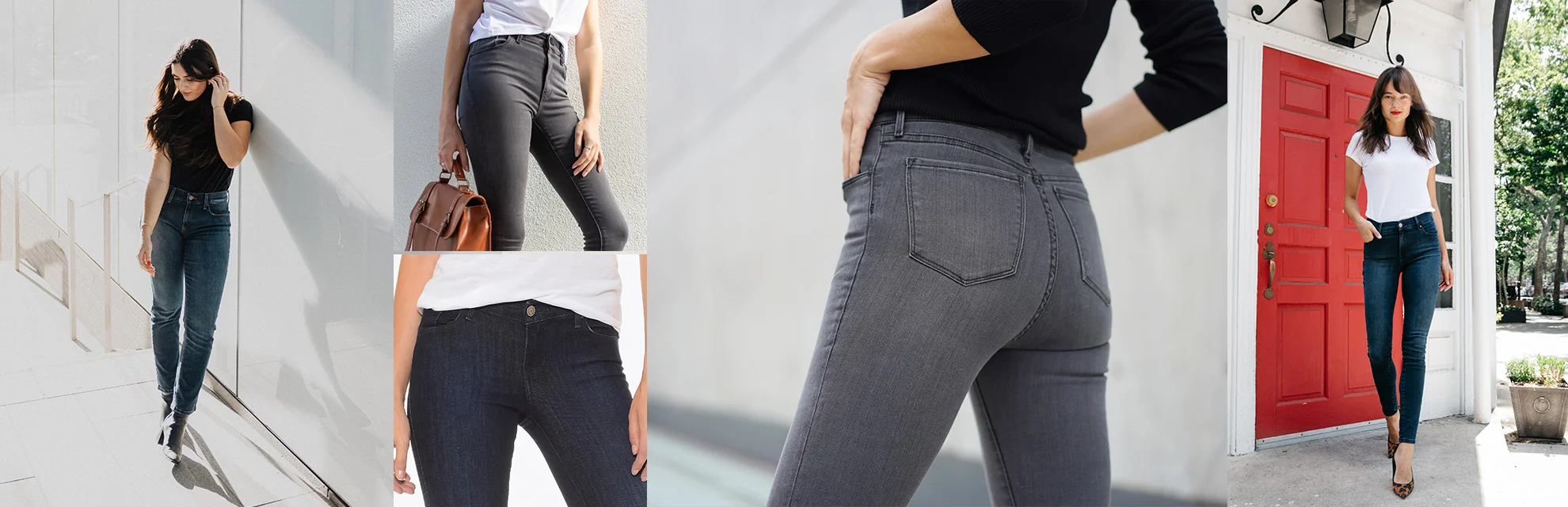
A waistband that digs in every day is more than a minor annoyance. Tight waistbands can make sitting uncomfortable, create pulling around the hips, and cause you to constantly readjust your clothes. Choosing a better size helps, but rise, fabric, and body proportions often matter just as much as the number printed on the label.
Check Whether the Size Is Actually the Problem
Start with the simplest test: can you sit comfortably for an extended period without the waistband pressing sharply into your abdomen?
Clothing should remain wearable during normal movement, not only while you’re standing in a fitting room. If the waistband feels restrictive even before eating, bending, or sitting, the size may be too small.
Look for Other Fit Clues
Pulling at the zipper, strained pockets, horizontal wrinkles, or a waistband that rolls can all suggest poor fit. These clues are often more useful than relying on a size tag.
Sizing varies widely between brands, so the same labeled size can fit differently from one garment to another.
Choose a Rise That Matches Your Body
Rise determines where the waistband sits between the hips and waist. A high rise may feel comfortable on one person but restrictive on another depending on torso length and where the body naturally bends.
People reviewing clothing fit discussions can use them as visual inspiration, but your own comfort should guide the final choice. A waistband positioned directly across a sensitive bending point can feel tight even when the garment technically measures correctly.
Try low-, mid-, and high-rise options rather than assuming your usual rise is automatically best.
Measure the Garment Instead of Trusting the Label
Take waist and hip measurements from trousers you already find comfortable. Comparing those measurements with new clothing can be more dependable than comparing size numbers.
Fit-focused style pattern resources may offer ideas about silhouettes, but measurements remain the practical starting point. Remember that body measurements and flat garment measurements aren’t identical, especially when stretch fabric is involved.
| Fit Clue | Possible Cause | What to Try |
|---|---|---|
| Waist digs in | Size too small | Try next size |
| Comfortable standing, tight sitting | Rise mismatch | Test another rise |
| Waist fits, hips pull | Cut too narrow | Choose curvier cut |
| Waist gaps after sizing up | Proportion mismatch | Tailoring or alternate fit |
Pay Attention to Fabric and Construction
Rigid denim and structured trousers have less forgiveness than fabrics containing stretch fibers. Two waistbands with similar measurements can therefore feel completely different.
Some designs also use thick internal interfacing, stiff seams, or wide waistbands that feel firmer against the body. Broader fashion and beauty inspiration can help with styling, but comfort comes down to construction as much as appearance.
Try sitting for several minutes before buying whenever possible. A garment that becomes irritating almost immediately probably won’t improve during a full day of wear.
Why Sizing Up Isn’t Always Enough
Going up one size may solve waistband pressure but create new problems through the hips, seat, or legs. That happens when the real issue is the garment’s proportions rather than its overall dimensions.
Repeatedly buying oversized clothing and tightening it with a belt can also produce bunching around the waist. A better-cut garment usually looks cleaner and feels more comfortable.
Don’t treat discomfort as the price of looking polished. The right cut should accommodate ordinary breathing, movement, and sitting without constant adjustment.
Frequently Asked Questions
How should a waistband feel when clothing fits correctly?
It should feel secure without sharp pressure, pinching, or constant rolling. You should be able to sit, bend, and move normally without feeling as though the waistband becomes dramatically tighter.
Does high-rise clothing feel tighter?
It can, especially if the waistband lands at a point where your torso expands while sitting. The effect depends on body proportions, fabric stiffness, waistband construction, and the garment’s actual measurements.
Can a tailor loosen a tight waistband?
Sometimes. The available seam allowance and garment construction determine how much extra room can be created. A tailor can inspect the waistband and tell you whether alteration is practical.
Fit for the Body You Actually Move In
Judge trousers during real movement rather than standing still in front of a mirror. Sit down, walk, bend, and notice whether pressure develops.
If tightness appears across several brands in the same rise, experiment with different rise positions and cuts. A more suitable silhouette often solves the problem better than repeatedly chasing a larger size.










Leave a Reply