
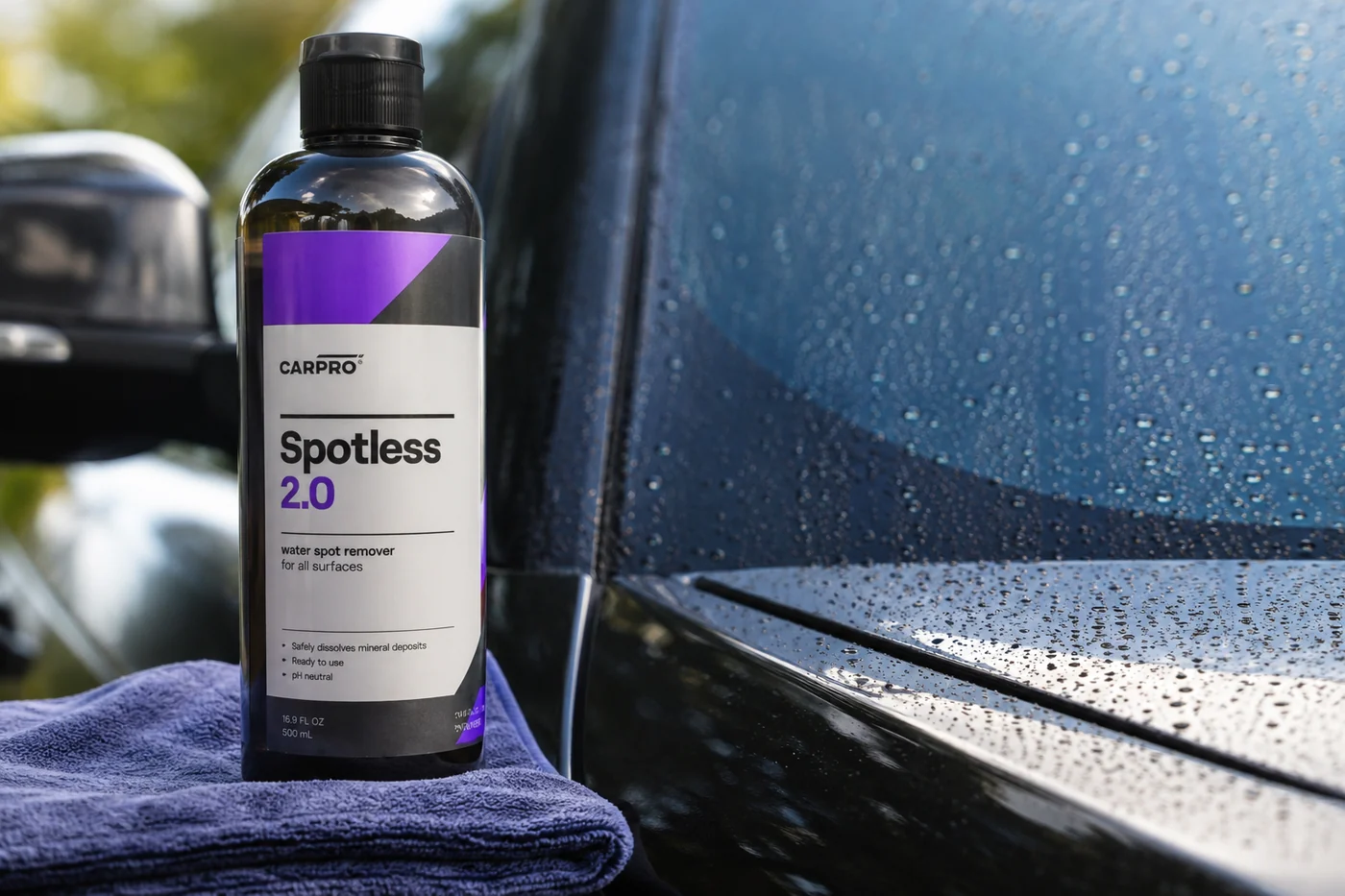
Water spots often appear harmless, but some deposits can become increasingly difficult to remove once minerals dry onto automotive paint. Early cleaning helps prevent ordinary spotting from turning into a stubborn surface defect.
The important distinction is whether you’re looking at removable mineral residue or an etched mark that has affected the finish itself.
What Causes Water Spots on Paint?
Water contains dissolved minerals. When droplets evaporate, some of those minerals can remain on the surface as circular deposits.
Sprinklers, hard-water washing, rain followed by dust, and water allowed to air-dry can all contribute. Hot panels speed evaporation, giving drivers less time to dry the vehicle before spotting develops.
Not Every Spot Is the Same
Some marks sit on top of the clear coat and respond to cleaning. Others remain visible after the mineral residue is gone because the surface has already been affected.
Begin With a Proper Wash
Wash the panel using automotive shampoo and clean wash media before trying stronger treatment. Loose dirt should be removed before any focused work begins.
Drivers reading vehicle detailing guidance may encounter numerous spot-removal techniques, yet starting with the least aggressive method helps protect clear coat.
Dry the panel thoroughly so you can see which marks actually remain.
Remove Mineral Residue Carefully
If standard washing doesn’t remove the deposits, use an automotive water-spot remover suitable for the vehicle’s finish. Follow its dwell-time and application instructions.
People browsing automotive reference material may learn about acidic cleaners and paint correction, but stronger chemistry isn’t automatically better. Product compatibility matters, particularly on delicate trim, glass coatings, or previously repaired paint.
Work on a cool surface out of direct sunlight whenever the product directions recommend it.
| Observation | Possible Situation | Next Move |
|---|---|---|
| Spots disappear washing | Surface deposits | Dry carefully |
| Spots fade with remover | Mineral buildup | Recheck panel |
| Smooth mark remains | Possible etching | Consider correction |
| Rough surface remains | Other contamination | Identify first |
Know When Cleaning Has Finished
After mineral removal, inspect the panel under direct and angled lighting. If the surface feels clean but rings remain visible, continuing to apply spot remover may not solve the defect.
General digital information channels can expose drivers to many DIY fixes, yet abrasive or acidic home mixtures can create additional problems when their strength and paint compatibility are unknown.
A mild polish may improve shallow defects, while deeper damage can require professional correction.
Common Assumptions That Lead to Damage
One mistake is assuming every circular mark is still a mineral deposit. Repeated chemical treatment won’t repair clear coat that has already been etched.
Another problem is polishing too aggressively before removing the minerals. Abrasive correction should address a paint defect, not substitute for ordinary cleaning. Identifying the problem first usually saves both paint thickness and effort.
Frequently Asked Questions
Are water spots permanent on car paint?
Many fresh mineral deposits can be removed. Marks that remain after the surface is fully cleaned may represent etching or another paint defect, which can require polishing or more advanced correction.
Can I prevent water spots after washing?
Dry the vehicle before water evaporates naturally, especially in warm conditions. Using clean drying towels and avoiding washing a hot panel can reduce the amount of mineral residue left behind.
Does waxing prevent water spots?
Wax or sealant may make cleaning easier and provide a sacrificial protective layer, but it cannot guarantee that mineral deposits or etching will never occur. Prompt drying still matters.
Treat the Deposit Before Correcting the Paint
Water spots are easier to manage when you separate cleaning from paint correction. Wash first, remove mineral residue with a suitable product, then inspect what remains.
If the surface is clean but visible rings persist, stop treating them like dirt. Correcting the remaining defect carefully is safer than repeatedly attacking the same area with stronger chemicals.









Leave a Reply