
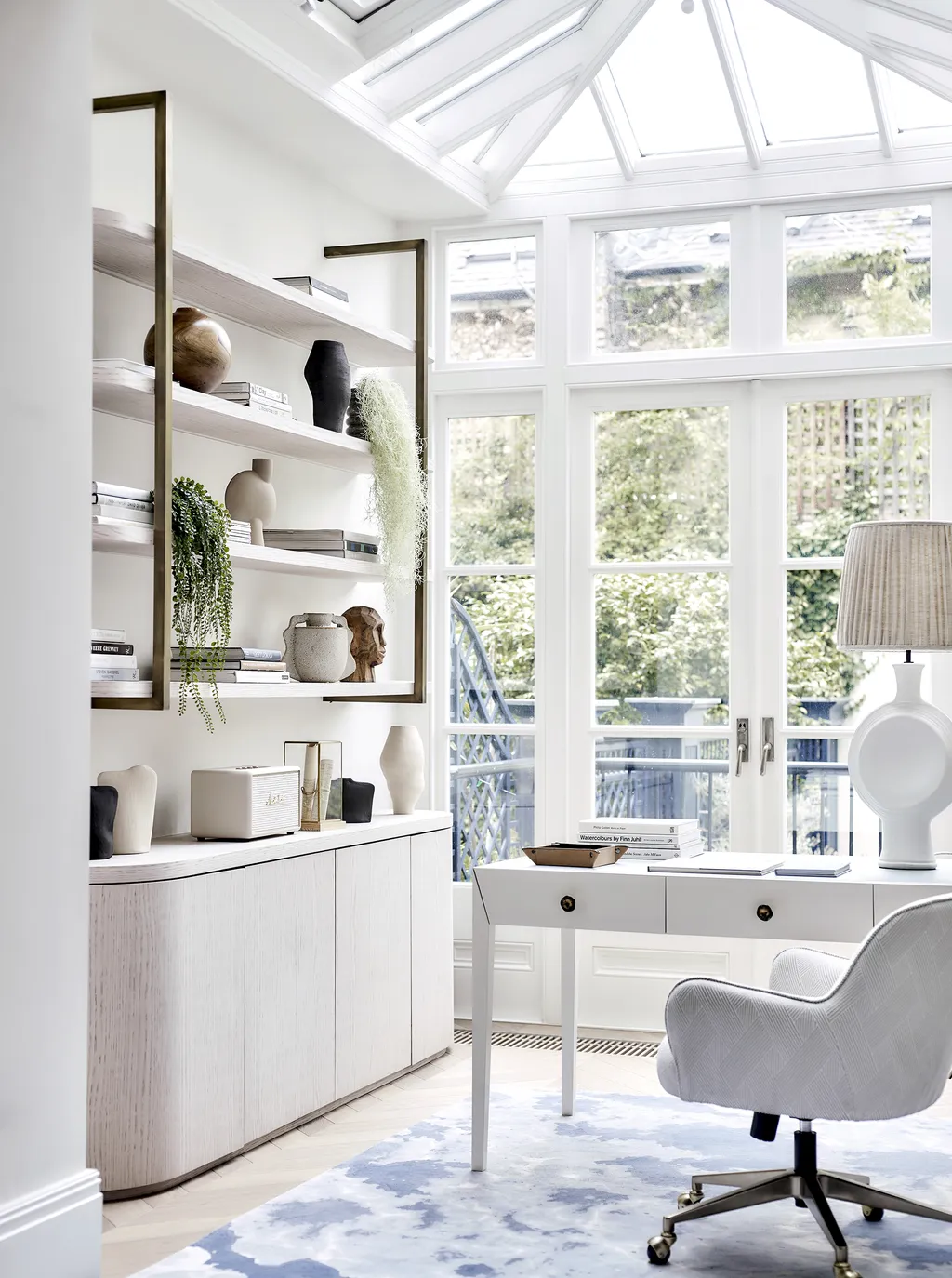
A tiny home office works best when every item earns its footprint. Instead of squeezing full-size office furniture into a small room, build the workspace around the tasks you perform most often. A compact desk, controlled storage, clear walking space, and disciplined cable management can create a functional work area without making the room feel crowded.
Design Around the Work You Actually Do
Begin with your daily tasks rather than a furniture catalog. Someone working mainly from a laptop needs less desk depth than a person who regularly handles documents, drawing equipment, or multiple monitors.
Write down what must remain within arm’s reach and what can live elsewhere. That simple separation prevents rarely used supplies from occupying the most valuable part of a small workspace.
Protect the Working Surface
A desk quickly feels undersized when chargers, paperwork, speakers, notebooks, and miscellaneous supplies permanently cover it. Keep the central surface reserved for active work.
Choose Furniture With a Small Footprint
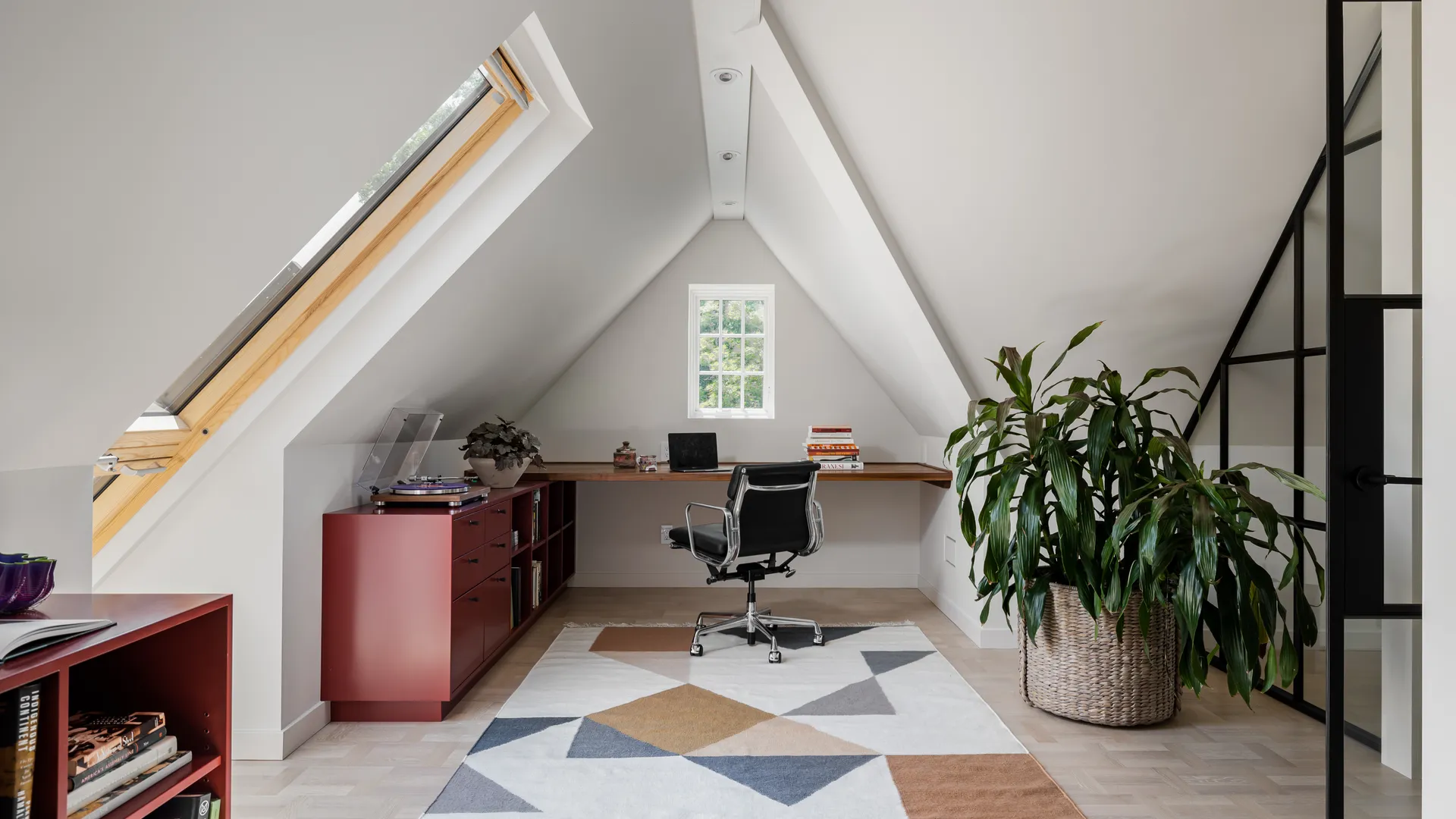
Compact desks, wall-mounted worktops, narrow consoles, and desks with built-in drawers can provide enough working room without dominating the space. Furniture should match the available wall and floor dimensions rather than relying on labels such as “small” or “space-saving.”
Browsing small-space ideas can help generate possibilities, but measure first. Include chair clearance, drawer movement, nearby doors, baseboards, and the space required to comfortably enter and leave the workstation.
Furniture that barely fits while unused can become frustrating once you’re actually sitting there.
Let Walls Handle More Storage
Vertical storage can free valuable floor and desktop space. Shelves, pegboards, wall organizers, and shallow cabinets keep supplies accessible without requiring another freestanding unit.
Among general home organization ideas, the most useful concepts are often the ones that assign every frequently used object a fixed location. Small offices become cluttered quickly when storage depends on finding an empty surface.
| Office Need | Compact Choice | Space Advantage |
|---|---|---|
| Work surface | Narrow desk | Preserves floor area |
| Files | Wall shelf or slim cabinet | Uses vertical space |
| Supplies | Drawer organizers | Keeps desktop open |
| Electronics | Cable tray | Removes cord clutter |
Control Cables Before They Spread
Even a tidy desk can look chaotic when several power cords, charging cables, and adapters hang underneath it. Mounting a power strip beneath the desk and grouping related cables can immediately make a small setup look cleaner.
Practical workspace planning resources can offer additional organization ideas, but don’t add accessories simply because they’re marketed for offices. Every organizer occupies space too.
Label cables that are difficult to identify and remove obsolete chargers. A smaller number of well-routed cables is easier to manage than an elaborate system built around equipment you rarely use.
Where Small-Office Design Often Fails
The common mistake is trying to make a tiny office behave like a large corporate workstation. Oversized executive chairs, deep desks, extra guest seating, decorative storage boxes, and multiple cabinets may each seem reasonable individually. Together, they consume the room.
Another problem is buying storage before reducing possessions. More containers can hide clutter without solving it.
Edit first. Store second. The best small office may contain fewer pieces than expected, but each piece should support a task you regularly perform.
Frequently Asked Questions
How small can a useful home office be?
There isn’t one required size. A functional office can occupy part of a bedroom, hallway nook, closet conversion, or small dedicated room if the workstation provides enough surface area, seating clearance, lighting, power, and storage for the work being performed.
Are floating desks good for tiny offices?
They can be excellent where floor space is limited because they reduce visual bulk and leave the area underneath open. Proper installation and adequate wall support are important, especially when monitors or heavier equipment will sit on the desk.
How do I make a tiny office look less cluttered?
Reduce visible objects, route cables, use closed storage selectively, keep the desk surface mostly open, and avoid filling every wall. Leaving some unused visual space can make the room feel calmer.
Make Every Inch Work Harder
A small home office doesn’t need miniature versions of everything found in a larger room. It needs a clear work surface, comfortable seating, accessible essentials, and fewer objects competing for space. Measure before buying, use the walls intelligently, and remove anything that doesn’t support your normal workflow. Function comes from editing, not filling.







Leave a Reply