
A cluttered living room often needs a better layout before it needs more storage. Furniture placement, walking paths, surface use, and visual balance can make the same amount of belongings feel either chaotic or controlled.
The goal isn’t an empty room. It’s creating enough structure that everyday items have somewhere sensible to go.
Start With the Room’s Main Purpose
Decide what the living room needs to do most often. Watching television, entertaining guests, reading, children’s play, conversation, and working from home all require slightly different layouts.
Trying to give every activity equal priority usually creates furniture conflicts. Establish one primary function and support secondary activities without letting them dominate the floor plan.
| Problem | Layout Change | Likely Benefit |
|---|---|---|
| Blocked walkway | Move furniture inward or aside | Easier movement |
| Crowded seating | Remove one oversized piece | More breathing room |
| Messy surfaces | Add defined storage zones | Less visual noise |
| Empty center | Group furniture intentionally | Stronger room structure |
Measure large pieces before moving them repeatedly.
Clear the Main Walking Paths
People should be able to enter, sit down, and cross the room without weaving around furniture. Start by identifying the paths used every day.
A sofa or chair may technically fit while still creating constant friction. Looking through everyday home inspiration can spark ideas, but your own traffic pattern matters more than copying a photographed layout.
Try removing one obstructive piece temporarily. The difference can be surprisingly large.
Group Furniture Instead of Pushing Everything Outward
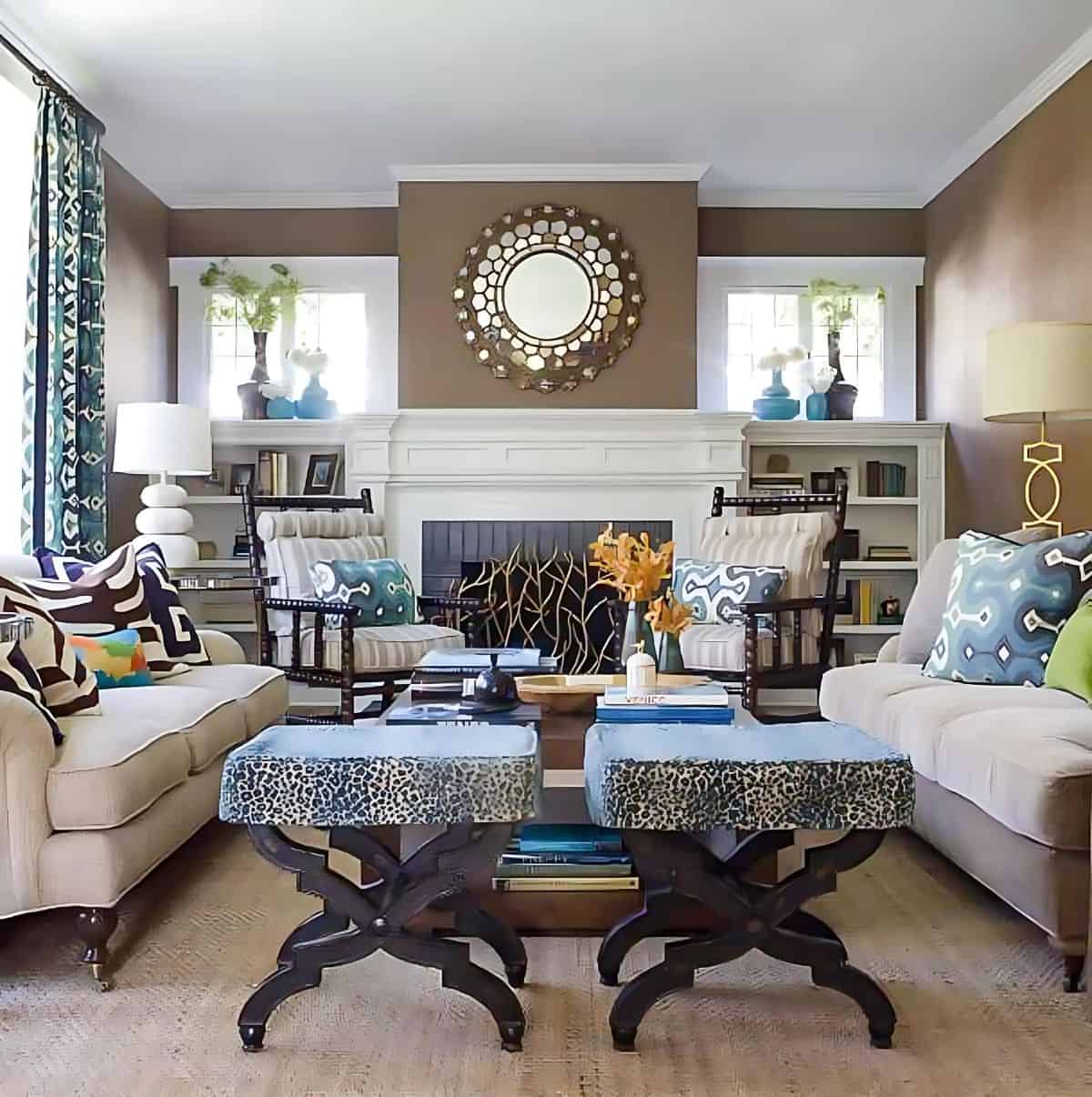
Placing every piece against a wall can create a large empty center while making the room’s edges feel crowded. In many rooms, pulling seating slightly inward produces a clearer conversation area.
Homeowners browsing interior reading ideas may notice that comfortable rooms often use smaller furniture groupings rather than treating every wall as mandatory storage space.
A rug can help define the main seating zone, particularly in open-plan homes where the living area lacks architectural boundaries.
Give Everyday Clutter a Landing Place
Remote controls, chargers, mail, blankets, children’s items, books, and drinkware become clutter partly because they are used frequently. Hiding everything in distant cabinets may be unrealistic.
Instead, put storage where the mess naturally appears. A basket beside the sofa, drawer near the entry side of the room, or tray on a coffee table can make cleanup almost automatic.
Broader home and lifestyle topics may inspire decorative choices, but practical storage should solve a specific recurring problem rather than adding another object to the room.
Why More Storage Isn’t Always the Answer
Buying another cabinet can increase clutter if the room is already carrying too much furniture. Storage pieces consume floor space, create additional surfaces, and sometimes encourage people to keep belongings they don’t use.
Before adding storage, remove obviously unnecessary items and examine whether existing cabinets are organized well. The hidden problem may be poor placement rather than insufficient capacity.
An empty corner doesn’t always need filling either. Some visual breathing room makes surrounding furniture feel more intentional.
Create Visual Calm Without Making the Room Bare
Limit the number of objects competing for attention on major surfaces. A coffee table covered with many small decorations often appears busier than one holding a few purposeful pieces.
Balance also matters vertically. If one wall contains a television, shelving, artwork, and tall furniture while another is almost empty, redistributing some visual weight can make the room feel calmer.
Keep items that support daily life easy to reach. Decorative simplicity should not make the living room inconvenient to use.
Frequently Asked Questions
How can I make a small living room feel less cluttered?
Protect clear walking paths, use furniture proportional to the room, reduce unnecessary surfaces, and group related items. Removing one bulky piece can sometimes create more improvement than adding several organizers.
Should a sofa always go against the wall?
No. Pulling a sofa away from the wall can improve conversation areas, divide an open floor plan, or create a walkway behind it. The best position depends on room dimensions and traffic.
What should I remove first from a cluttered living room?
Begin with items that don’t belong in the room, followed by unused decorative objects and furniture that blocks movement. This creates enough space to judge the layout more accurately.
Let the Layout Do More of the Work
A calmer living room comes from deciding what deserves space and arranging it around real daily behavior. Fix the walking paths, define the main seating zone, and place storage where clutter repeatedly collects.
Once the layout works, keeping the room organized becomes much easier because the space itself supports the habits you want.






Leave a Reply