
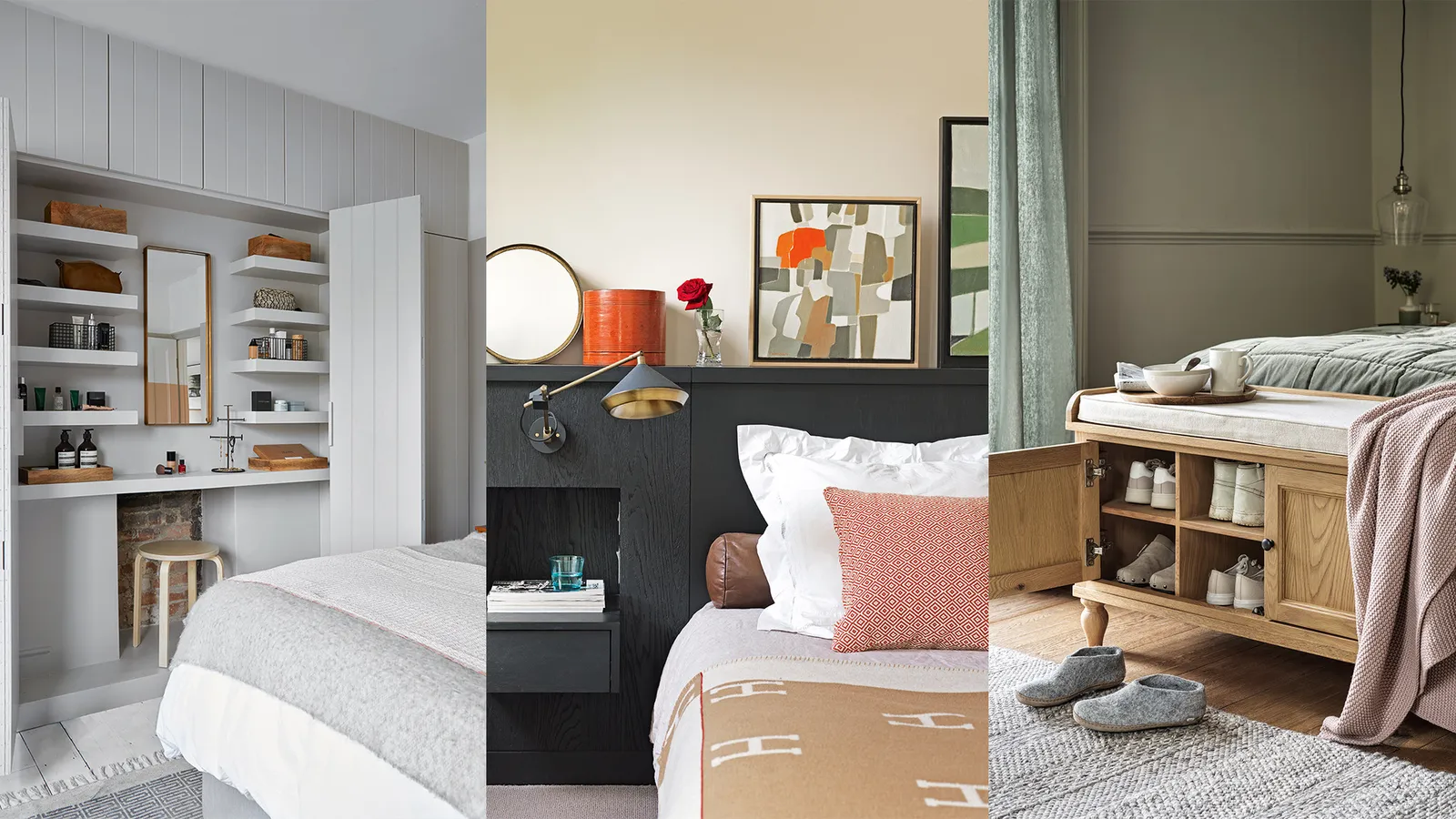
Limited bedroom storage doesn’t automatically mean another dresser, cabinet, or shelving unit is needed. Extra furniture can consume the little open floor space that remains. A better approach is often to reorganize existing closets, walls, doors, drawers, and overlooked gaps so the room holds more while still feeling comfortable.
Make Existing Storage Work Harder
Start by examining drawers and closets that appear full. They may contain poorly folded clothing, large empty gaps, items stored in the wrong season, or categories mixed together in ways that waste space.
Many bedroom organization approaches begin with the same idea: improve the capacity you already have before adding another storage piece. Removing clothing you no longer wear can create more usable space than installing a new shelf.
Divide Drawers by Function
Drawer dividers or small containers prevent socks, accessories, sleepwear, and other small items from spreading across the entire drawer.
Store frequently used clothing toward the front. Occasional pieces can move toward the back or higher portions of the closet.
Look Upward for Unused Storage
Bedroom walls often provide more storage opportunities than the floor. Hooks behind doors can hold robes or bags, while an existing high closet shelf may accommodate lightweight seasonal items.
Ideas from small-space room planning can help identify these overlooked vertical areas. The goal isn’t to cover every wall with storage, but to use spots that don’t interfere with movement or rest.
| Unused Area | Possible Storage | Good For |
|---|---|---|
| Closet top | Labeled bins | Seasonal clothing |
| Door back | Hooks | Robes and bags |
| Drawer gaps | Dividers | Small clothing |
| Upper wall | Existing shelf space | Light items |
Improve Closet Density Without Overpacking
A crowded closet often wastes space between hanging garments and the floor. If the layout allows, shorter clothing can leave room below for shoes, folded items, or containers already owned.
Broader interior organization ideas can encourage a useful change in perspective: empty vertical gaps are often more valuable than another piece of furniture. Use them carefully while keeping clothing visible enough to find.
Group Clothing by Similar Size
Hang shirts beside shirts and longer garments together. This creates more predictable open space beneath shorter pieces.
It also makes the closet visually easier to scan, reducing the chance of buying duplicates because existing clothes were hidden.
What Makes Small Bedrooms Feel More Crowded
Trying to store every possession in the bedroom is one major problem. Documents, rarely used electronics, household supplies, and unrelated storage boxes may belong elsewhere.
Visible storage can also become visual clutter. Open piles on chairs, window ledges, and bedside surfaces make the room feel smaller even when they occupy little physical space. Keep exposed surfaces selective rather than treating them as permanent storage.
Build a Short Nightly Reset
Organization becomes easier when clothes and personal items are returned to their places regularly. A five-minute evening reset can prevent a chair from turning into a second wardrobe.
Keep the routine simple: hang reusable clothing, put laundry in its container, clear the bedside area, and return accessories to one assigned location.
Frequently Asked Questions
How can I add bedroom storage without buying furniture?
Use existing closet height, door backs, drawer dividers, hooks, and available shelf space. Removing unused belongings can also increase capacity without adding anything physical.
What should I remove first from a crowded bedroom?
Start with obvious trash, clothing that no longer fits your needs, empty packaging, duplicate accessories, and items that properly belong in another room.
How do I keep a small bedroom from looking cluttered?
Limit objects on visible surfaces, keep clothing off chairs and floors, use consistent storage locations, and avoid filling every open wall or corner.
Protect Space as Well as Storage
A bedroom should still feel like somewhere to sleep and unwind, not a storage unit with a bed inside it. When space is limited, improve drawers, closets, doors, and vertical gaps before bringing in more furniture. The most successful setup stores necessary belongings while preserving clear floors and calm surfaces. Creating empty space is part of organizing too.




Leave a Reply