
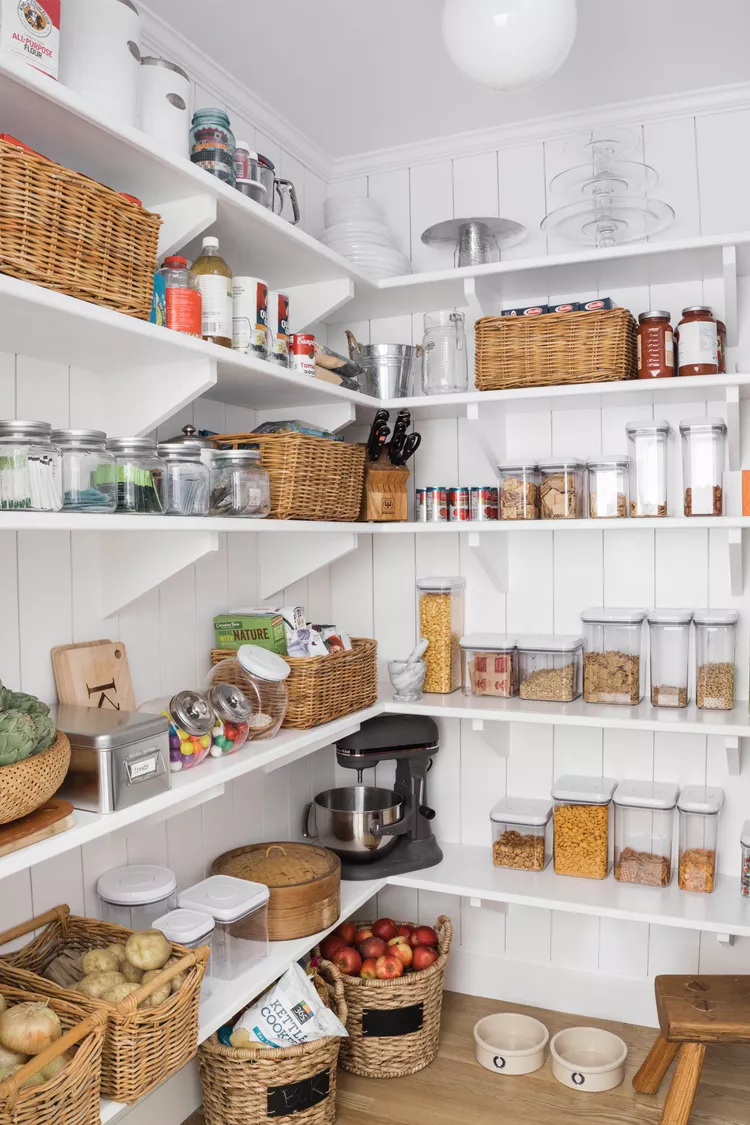
Limited pantry space becomes easier to manage when storage is based on what you actually use rather than how many products you can squeeze onto a shelf. Clear categories, accessible containers, vertical storage, and sensible purchasing habits can increase usable capacity without turning a small pantry into an overfilled puzzle.
Start by Removing False Storage Problems
A pantry can look too small when part of the problem is simply excess inventory. Pull everything out, discard expired food, combine duplicates when safe, and separate items your household rarely uses.
Then group remaining products by purpose. Baking ingredients, breakfast foods, canned goods, snacks, grains, sauces, and meal components become easier to store once every category has a defined zone.
| Space Problem | Storage Fix | Why It Helps |
|---|---|---|
| Deep shelves | Use pull-out bins | Reaches items in back |
| Tall empty gaps | Add shelf risers | Uses vertical space |
| Loose packets | Group in baskets | Prevents scattering |
| Crowded floor | Use stackable storage | Keeps items organized |
Use Vertical Space Before Adding More Containers
Shelf risers can turn one tall shelf into two useful levels for cans, jars, or short containers. The back of a suitable pantry door can also hold lightweight items when a securely fitted rack won’t interfere with closing.
Home organization ideas appear across decorating blogs and practical home publications, but measure your actual pantry before purchasing organizers. A beautiful storage product that wastes several inches around its edges may reduce usable space rather than increase it.
Think in Inches, Not Product Photos
Measure shelf width, depth, height, door clearance, and awkward corners. Those numbers matter far more than whether an organizer looks attractive in a staged kitchen.
Choose containers because they solve a specific problem. Don’t transfer every packaged ingredient into matching jars unless doing so genuinely improves visibility or stacking.
Make Deep Shelves Work Like Drawers
Deep pantry shelves often hide food behind other food. Instead of lining products from front to back, place related items in bins that can be pulled forward as a group.
Browsing household organization resources may provide useful ideas, but the best arrangement should reflect what your household reaches for most often. Everyday staples belong where they can be grabbed without moving three unrelated products first.
Use labels where categories aren’t immediately obvious. Broad labels such as “snacks,” “baking,” or “pasta and grains” are often easier to maintain than creating a separate container for every individual item.
Control Inventory at the Shopping Stage
A small pantry can’t comfortably hold warehouse-sized quantities of every staple. Before buying multiples, check what you already own and whether the product will realistically be used before more groceries arrive.
General daily household references may discuss stocking strategies, but available space should set the limit. A discount isn’t much of a saving if excess packages create clutter, hide older food, or force useful items into inconvenient locations.
Create a Simple Restocking Rule
Give frequently purchased foods a maximum quantity. For example, you might keep one open package and one backup rather than buying several replacements whenever a sale appears.
A small running grocery list also helps. Add an item when the backup is opened instead of waiting until the last portion disappears.
Where Pantry Organization Goes Wrong
Buying organizers before decluttering is one of the most common mistakes. It turns excess inventory into neatly contained excess inventory without solving the underlying space problem.
Another trap is chasing perfect visual uniformity. Decanting can help certain ingredients, but dozens of specialty containers require money, cleaning, labels, and refilling. A pantry that looks slightly mixed but lets you see and reach everything is usually more functional.
Keep the System From Filling Up Again
Spend a few minutes before grocery shopping checking open packages and backup supplies. Move older food toward the front when adding new items so forgotten products aren’t repeatedly pushed into dark corners.
Reset categories whenever they begin spreading beyond their assigned space. If one category constantly overflows, either give it more room or buy less of it. Storage boundaries should respond to real household habits.
Frequently Asked Questions
How can I organize a pantry without buying containers?
Start with decluttering, grouping similar foods, moving frequently used items forward, and stacking products safely. Cardboard boxes already in the home can temporarily group packets while you determine whether purchased organizers are actually necessary.
Are clear pantry containers worth using?
They can help with dry goods you buy regularly because the remaining quantity is visible. They are less useful when transferring products creates extra work, removes important package instructions, or leaves partially filled original packages elsewhere.
What should go on the highest pantry shelf?
Reserve harder-to-reach shelves for lightweight, less frequently used items rather than everyday staples. Avoid placing heavy or breakable products overhead where retrieving them could be awkward or unsafe.
Give Every Inch a Practical Job
A small pantry works best when capacity and convenience are balanced. Keep the foods you use, create broad categories, use vertical and deep spaces deliberately, and resist buying inventory merely because there’s technically somewhere to squeeze it.
The most useful storage system is one you can reset quickly after an ordinary grocery trip. If maintaining the pantry feels complicated, simplify the system before adding another organizer.












Leave a Reply